Activism, Poetry, and Students

Sorry for the delayed post this week! I was waiting for this assignment to be turned in from my students so I could write more about it! 

This week, I’m going to be writing a little more in depth about a lesson I did with my students around using poetry to discuss important topics and issues. I’ve broken it into four parts and linked it below.

Continue reading

I Am Tired: Marathons and Sprints in Conversations Around Race

So, earlier this week, I wrote this piece about asking to know versus asking to win.

There was a whole middle section that I just… cut out. The topic didn’t just stem from being involved in debates, but, to be honest, very specific kinds of discussions around race and privilege.

Namely, that sometimes I feel that folks (especially folks with gender/race privilege) will come into a conversation about tough topics on my page with all kinds of questions. Something about some of the questions felt off, which is when I realized: they weren’t asking because they wanted to know, they were asking because they want to win. They want to push buttons or have a debate, and perhaps prove that all my rambling about privilege and power is invalid.

I shouldn’t be surprised. Learning that you might be wrong, or that you are complicit in something bad feels gross (I certainly have my share of privilege that I and others have have to check often). Feeling guilty can make people get defensive and makes them want to win, to prove that they are clever/smarter/not bad.

My issue with that, though, is that if you are the one with power already and asking all the questions, you already have the leg up in this “fair fight” of a discussion. Those who lack that privilege and power bear the burden of being oppressed on the regular. They are often tired of explaining to themselves and to others about their culture, their life, and sometimes even why their voice matters. That shit is tiring. 


Now, it is way more tiring for folks other than myself– I have quite a bit of privilege in my sexuality, SES, etc. So, please know that I know that (and check myself for the below too) as I say the following:

When someone comes demanding I (again, because we have to do it all the time) explain thoughts about race/privilege/power to them, that is not a fair fight or an equal debate.  That’s them racing me for a 5k section of what is the marathon of my life. I am coming into this with a ton of emotional baggage and frustration– most folks from minority groups have it– that makes these “fascinating discussions” some folks want to have sometimes feel like another frustrating bump on what is an already tiring course.

Then, at the end of the discussion it is very possible that, if whoever asked do not live that oppression, they will be able to let that conversation go. They get to finish the race, and go on with life thinking that this was an interesting intellectual detour for them.

People living that struggle will have to relive that conversation– with others and internally– over and over again with new people, each time asking themselves if they were “too harsh,” “too real,” or upset someone’s feelings. Those who come from outside dominant culture, who “constantly [juggle] the power asymmetry of the two worlds, two cultures, and two languages” don’t get to finish the race.

So yeah, we might have a lot of strong, passionate thoughts about it— we think about it a lot and some of us are kind of tired

Then, all of a sudden, if we dare show that, it’s “why are you so mad?” and “I’m trying to talk about this with you!” and “You’re coming at this with so much anger, it’s unfair/unsavory/unprofessional.” In doing so, they show that the opinion and voice of whoever they asked don’t matter to them as much as their own need to “win” and feel good about themselves. Is it maybe possible that we’re angry with good reason? 


I almost didn’t write this post because I was preemptively tired from the explaining that might come from it. I’ve had white male acquaintances tell me that it feels like I hate white people, or that my arguments make all their #notallwhitepeople feels come up. And… I get that. I clearly don’t hate all white people, and I’ve had my own privilege checked on things and it feels gross (name about sexuality, which you’ll see I’m not mentioning as much mostly because I know I have NO idea the oppression that comes that struggle, so I won’t try and speak to it).

But man, like John Stewart said, if you’re tired of hearing about privilege and oppression, imagine how tiring it is to live in that oppression. All. The. Time.

I’m generally happy to talk about these things with folks who want to have an actual discussion. I am not always right, and if you actually want to listen to what I have to say, I am more than happy to do it right back. I have no issue getting pushed or talking about these things, but I do have an issue consistently having to defend my lived experience, and the lived experiences of folks who have felt similar or worse struggles.

So, I’m not really interested in sprinting to try and “win” with folks who are not interested in making each other stronger. I hope, maybe, that they’ll just want to run with me instead.

Want to Know vs Want to Win: Learning to Listen

I had a whole, long thing in my head about a topic, and then brilliant thinker who I follow from afar summed it up in 140 characters:

https://twitter.com/Karnythia/status/563735107803295744

This made me think a lot about conversation, power, and intention though, especially in the context of my own classroom. A lot of times, we taught to enter into (perhaps difficult) conversations by asking questions: why do you think that? What makes you say that? How did you come to that conclusion? etc.

I’ve come to realize, though, that sometimes people are entering into the conversation differently than I am, and sometimes, as teachers, it’s easy to default into a line of questioning that is not helpful. This leads me to ask (often myself):

Are you asking because you want to know? Or are you just asking because you want to win?


I acknowledge that fighting for the sake of fighting (or perhaps “debating for the sake of debating”) is fine. Some people love that, and I think that it can be really great. My boyfriend loves a good debate, and is the type of guy who watches Fox News just to feel riled up and be incensed at people. If that’s your thing, that’s cool.

But just because you love that doesn’t mean the other person does, and it’s important to think about that other person. Empathy matters! It’s important to respect the other person if they decide they’re not about where this conversation goes. It’s not because they’re “weak” or “scared,” they might just not be the type of person who wants to go 10 rounds for the hell of it.

My issue with it in a lot of cases though is that it I feel like rarely leads to sharing or increase of knowledge. If you are debating or asking questions just for the sake of pushing buttons, you’re not really listening to the other person. So, instead of actually taking the time to process what they’re saying or trying to hear the opinion, you’re only listening to them so you can come up with you’re next argument, so you can find the best way to poke holes in them so you can win your points.

That’s fine, I suppose. If your purpose is to win all points and ruffle some feathers (yours and your opponents), then do you. But I don’t know if it’s the best way to lead to actual conversation and intellectual growth.


Here is where it comes back to the classroom, though. As teachers, we are always in positions of power and privilege over our students. No matter how smart my students are, I am the adult in the room. I am the one (theoretically) guiding this class, and in charge.

So when I want to have a discussion with my students, I HAVE to be asking myself: am I asking them because I really want to know? Or am I asking them because I’m right and their wrong?

Clearly, the latter has some of its merits. Guiding questions can be a good way to question students and let them find their own way to the answer while providing some clues for them to follow. But I think as a teacher it’s very easy to fall into that type of questioning even when there is no real right answer, or students can be pushed to think outside the box.

If I want my students to truly reflect on something, I shouldn’t be trying to score points of them, or only half-listening because I want to prove MY point, I should be actually listening to themDoing so might lead not only to them teaching something to teach other, but teaching something to me too.

Conversations with Me and My Monster

This weekend, I had a panic attack.

Now, panic attacks aren’t new to me. I’ve had them in my life– while running, in the classroom, just in life in general. It happens. I remember once, when I was seven, a bout of panic and anxiety left me motionless and sad on the couch. My mom asked me what was wrong, and the only way I could describe it was, “I can’t stop thinking about all the sad things that I think about.” She sighed, and said it would pass. It did. It always does.

I guess, in some weird way, I am still susceptible to the “I’m fine I’m fine I’m fine” trap. It’s been many moons (months, maybe?) since my last panic attack. I credit this to a lot of self-care, being more upfront with people in my life, a job I love, and just generally being happier with my life. While, it’s true, panic and anxiety do not have a direct correlation, I know that I am generally less likely to have panic attacks if I manage my anxiety.

So, after months of finally feeling stable, the notion that an attack was brewing wasn’t even something I actively ignored, it was just an honest misunderstanding between my body and I. The post about being grumpy? That probably had something to do with it. I had felt moody and gross, but assumed it was hormones, or the winter doldrums or post holiday blues.

So, I tried to take care of it in all the ways I normally would. I ran, exercised, I napped. I did my best to take care of myself. I drank more wine than I may care to admit. Rationally, I was sailing smooth, and I was doing everything right.


green_baby_monster_by_misstemprament-d52z3lnThe problem with Panic, though, is that it’s not interested in what’s rational. Panic doesn’t care about all the days it’s been that you felt fine.

I often think of Panic as the angry monster that sits waiting in my brain. It’s frustrating and irrational and needy, like a big dumb bully. And what Panic wants is for you to explode. It wants to feast on all that delicious anxiety and flight-or-fight chemicals it knows your brain will produce, if only you let it. Panic doesn’t want you to sail smooth. Panic wants to enjoy your (perhaps inevitable) explosion. Sometimes, you beat Panic, and you get it to settle down. Sometimes… not so much. Continue reading

Grumpy Teacher

My students are currently typing, but I missed my normal weekly deadline (agh!) so figured I’d type along with them. I love their topic and want to explore it at some point myself (write about something you’ll never do/never do again). 

I’ve noticed lately I’ve been in such a grumpy mood at my kids. I don’t know if it was just that time of year or the honeymoon is wearing off (I suppose that more than a semester in isn’t bad for that to happen). It also tends to happen around progress reports, because they ask ridiculous questions (can I turn in this 2 month old homework assignment for late credit?) or act immature and entitled (I sent you my late homework 12 hours ago and you still haven’t graded it!). And I’m just looking at them like “OH REALLY.” Then I feel guilty for being angry at children (who I also love). Then I get annoyed and throw my phone across the room when I see their emails (props to my guy for listening to and loving me while I vent).

I still love them, though, and they still mostly crack me up and make me laugh. I’m going to try and refocus myself this week and get back in the game. It’s only four more months till summer, right? 🙂

Oh! Speaking of summer– I’ve accepted a position to teach two classes at my school and I’m so pumped. One is a “Little Journalists” class for 5th-8th graders, and one is a poetry and creative writing workshop they’re letting me design! I’m so excited to get to design my own class completely for the first time.

Okay okay. That’s all for now. Time to get them back on task too! 😉

Comments and Kindness: Loving My Body (And Yours)

The problem with social media (that I knowingly accept) is that sometimes opinions from people you’d normally ignore get thrust right into your face.

the struggle was real.

the struggle was real.

So, I was looking at the photo (right) that my boyfriend posted of me last night. After some joking, wespontaneously splurged on a giant, ridiculous sundae to share while out to dinner (surprisingly well priced!) between the two of us. Obviously, we didn’t finish it, but it was pretty darn good and a rare indulgence that made us laugh. We looked at the series of the two photos next two each other and laughed even harder.

The next  morning, there was a comment that the sundae was loaded with “unwanted calories,” (my reaction) and that I should “try a kale salad instead” to feel better.

Oh.

Now, sure. Eating healthy is really important, and I don’t dispute the claim– eating healthy really will make you feel better over time. I eat pretty healthy. I love kale, I drink green smoothies (my 9th graders often comment on my “salad drink”), and if you know me at all you probably know that I like working out a lot.

Still, something about the message really annoyed me. While there’s always room for improvement, I think I’m in pretty good shape. Also, what’s wrong with indulging sometimes? Nearly any dietician or nutritionist will tell you that the occasional indulgence is part of a balanced life. While it’s important to be healthy, life is short, so I firmly believe that we should enjoy it. Sometimes that means going nuts on a giant sundae on a random Wednesday.

Why did this bother me so much? I don’t know this person. Their opinion doesn’t matter to me. I have every rational reason to ignore it.

Then, it hit me: despite all my reasoning, the comment still made me feel bad about myself. I felt guilty for eating the sundae. I took a little longer in the mirror this morning and asking if I looked okay. Like a lot of runners and (unfortunately) women, I can be a little neurotic about my weight and body. This post only made me think about that more. Maybe I shouldn’t have eaten the sundae. Maybe I should’ve said no.

And some of that is on me. Guilt is a choice we make. Disliking yourself is a choice. I know I can (and hopefully will) brush off these comments. I was mad at myself for not living up to my own standards of loving your body and, frankly, brushing off the negativity.

This is where I think empathy is such an essential thing– both for me towards this commenter and for whoever makes the comment. I don’t doubt they had decent intentions in saying this. Or maybe they don’t think it’s a big deal. So I want to let it go.

It points out something that I think we struggle with in the fitness community though. There’s a trainer I love at my gym  who prefaces much of his advice (when asked) with this (paraphrased): I don’t know everything and you can do whatever you want. When you get to be good at something, you want to start sharing that with other people. You get excited and hyped and when you see something that you feel you know about, you want to share that knowledge. I get it, and sometimes do it too. But unless I were someone’s specific doctor, nutritionist, coach, or they asked for advice, telling someone how to live should probably stay off-limits. We don’t know what that other person is dealing with, how much progress they’ve made so far, previous medical history or frankly what they need. I can give my best guess on, let’s say, running advice based on years of anecdotal evidence, but fitness and how to “be fit” is a relative benchmark and  topic that is still hotly debated, even amongst people who ARE experts.

Finally, it reminded me that we should be thoughtful about the things we say to other people, and it’s even harder to do online. It’s easy to quickly and breezily type and post a comment and not think how it will affect the other person– we don’t see their face or their immediate reaction to it. Even with good intentions, it’s hard to read what a person will be willing or is able to hear if you’re not in front of them. So, even if you meant it to be helpful, you may end up doing more harm than good.

So, all I will do is smile, and not beat myself too much about the sundae I had or the way I feel after. I spend much of my life thinking about calories, fitness, running, and body fat percentage, and appreciate the break to just enjoy an indulgent thing with someone I love. Instead, I’ll just focus on how much the evening made me laugh, and how blessed I am to have so much love in the world.

Stargazing (A Brainstorm on Watching Children Grow Up)

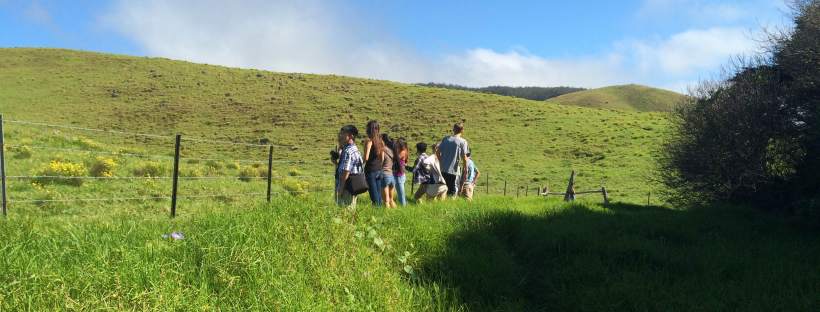
A group of

A group of students looking out on a Waimea meadow.

Ok. ok. I am writing. This is a purely life-update-y get-stuff-on-paper post. I’m a little more than delayed. With Monday being Martin Luther King Jr. Day, then I got a horrible cold from students while on a speech tournament… things just got lost.

I also got to be a part of an amazing #educolor twitter chat today, which you can read more about here.

SO… things are good. No really. My friend Shuhei asked what was new with me and… I don’t have much to report. Things are good! Chaperoning the speech team was a blast! Things are generally nice and quiet.

OH!


So, my students, their speech coach, and I went Stargazing while we were in Kohala. It was absolutely gorgeous. I’m not a particular outdoorsy person (while I love hiking, I’ve never been camping), so I have very little context what it was like to be in rural anywhere, much less Hawai‘i.

It was… breathtaking. Even remembering it, I am nearly speechless. It was like looking up in a star-dome at a museum, but knowing that it’s completely real, having everything twinkle and fill the sky with a vividness never imagined is surreal. I looked up at what felt like millions of stars, and the students and I were quiet. They self-implemented a five minute silence rule, but they were quiet and contemplative for at least ten.

After, I was standing in the freezing cold with Bill, their coach and a 27-year teaching veteran. We watched the kids laugh and joke and talk about stars. They had just a complete joy in each other. In the brief time they had known me, they had made me feel like I was part of their family, like they genuinely liked me being around.

Bill looked at me and said, “This? This is why I’m still doing it.”

I looked at their backs while they were quietly looking at the stars, and completely understood what he meant. It’s easy, when looking up into the great oblivion, to perhaps feel lost. To think about what we’ve lost and where we stand in that loss, or what we are seeking and what are place in the world is. It’s beautiful, yes, but also perhaps a little terrifying. What happens now? What will this be in five years? Ten?

I looked at my kids looking at the stars and I just… knew. This was right. This was lasting. I was filled with such a sense of peace and contentment. I loved getting to just be around, watch them learn stuff, learn stuff with them and from them, talk story and just enjoy seeing them grow up.

I think beyond the whole idea of feeling good about ~sharing knowledge~ with kids, we forget to see one of the most basic and grace-filled things we have as educators: we get to see children become adults. We are witness to and take part in the actual creation of human minds. We get to watch them change and form and reform and fail and find so much beauty and life. We get to see them discover. We get to see them empowered. Hopefully, we get to help them do it.

Things, as they stand now, are right where they need to be in this moment. I am 27 and consistently on the precipice of something new and everything is in flux always. Except that it’s not. The instability itself, the moment we were in right then and even now are what stays. The stars I saw that night may grow or die out or change position in location from where I stand, but that’s okay. Things will move, but those stars were right where they needed to be for my students and I to just love them and spend some time finding joy in each other.

We are the same. Things may will change, but all we can ask is to find the peace and contentment to see how we are affecting this moment. Right now– and likely for a while– I am a teacher. I am a guide. I am (hopefully) a friend. Right now, I am finding joy with kiddos, and it’s exactly where I need to be.

The Run: Stopping Time and Finding Joy Again

I don’t know if I can do this.

Maybe it’s not a good day for me to go out, I think to myself. My left leg hurts. I’m hormonal and tired and getting back into the swing of things after the first week back to teaching has been hard. Yeah, maybe today is just a rest day, I think as my left quad throbs. 

I cross the street under the hot Honolulu sun. It’s January, but one of the benefits of living in Hawai‘i is usually that our weather is good enough that it’s always alright to run. Now, though, the heat in the late afternoon sun feels overwhelming. 

I come to a stop a few yards after the corner, and rub my hands over my face. I turn back to the hill up to my apartment. I look back forward towards my route, up a different hill. This is one of the many small decisions I’ll make today, but for some reason my will to move my feet has been weighing heavier on my mind recently.


A little over two years ago, I wasn’t sure if I was going to run again. After admitting to myself I was in pain for quite some time after getting hit with a car by running the year before, I finally saw a doctor who confirmed my worst and obvious fear: I am not invincible.
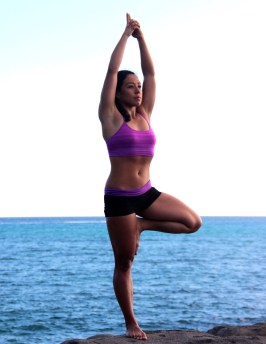
Yoga1

Tree Pose. PC: Stephen May

My doctor reminded me of something I should have realized but didn’t want to admit: sometimes when you deal with something a little physically traumatic like, say, getting hit by 3,500 pounds of steel, it will take some time to heal.

I was sad, and bummed, and upset. I didn’t know if I would ever run the same way again– my doctor said I would likely not. So, I did what a lot of folks would do: I picked myself up and adapted. I let myself fall in love again, this time with yoga, and ended up becoming teacher certified.

Still, some part of me knew that I could try everything in the world, but it wouldn’t change the fact that I love running. After some careful weaning, and a lot of cross-training, I started to try and run again. I finally got myself back into the right pair of shoes (Lady Issacs from my faves at Newton Running), and slowly– so slowly– I started to get back into running. I jumped into my first half marathon in May of 2013, more than a year after taking a break from Marathon running.

Now, that’s a lovely story, but it admittedly glosses over some tough bits. It glosses over the nights of painful foam rolling, crying on the floor of my apartment wondering if I’d ever run the same. It glosses over the weeks of stressing out before races, worrying if I’d feel great like I used to, or fall apart before reaching the finish line.

What I also fail to mention is that it’s not like I returned to running as fast as I used to be. In fact, my pace for even a casual run dropped by about 2 minutes. I hadn’t run miles that slowly in years, and when I would hear my watch beep and look at the time, I often felt disappointed. My run was that slow? I would think, aghast. The elation I had felt at even completing a mile would almost immediately be replaced with a ticker of negative thinking in my head. If you’re going to run that slowly, why get out of bed at all?

I hate that voice. I have done everything to fight that voice for other runners, especially new runners who reach out to me. I have often written and commented to others that any run is a good run, that any pace, is good. Any time you are strong enough to lace up your shoes, you should be proud.

So why couldn’t I show that love to myself? Why was it the moment my own running wasn’t up to some invisible bar I had created that I felt like giving up?


A pair of guys, seemingly University boys, saunter by me, taking up the entire sidewalk between the two of them– a pet peeve of mine. They are chatting, and I can’t hear them over my music and internal monologue about running, but I see one of them turn back and eye me up and down. While I have no idea what he is thinking– does he think I’m cute? Or gross? Or merely making sure I’m not going to steal his money?– I project the judgement I am putting on myself onto them. Unfair? Yes, I know, but I need the motivation, and I decide what they don’t know can’t hurt them.

Just another block, I tell myself. Just one more block up the hill to smoke them, and then I’ll stop. I swear I will.


It is April of 2013. During a particularly bad run, I am thinking about Batman. The new guy I have just started seeing loves Batman, and so we recently rewatched the movie Batman Begins. 

My left hip begins to throb, and I know I need to stop and stretch, but this just makes me really mad. How can I stop now? I’m just going to have to slow down. Maybe I should just stop altogether. Maybe I’m not going to run right ever again. I stop to stretch out my hip, grumbling at everything happening to me.

When I am at my lowest, a strange thing happens: Michael Caine’s voice pops into my head. I know, it’s not exactly the Angel Gabriel speaking to Mary, but I suddenly hear the oft-quoted Alfred line:

Why do we fall…? So we can learn to pick ourselves back up.

So… why was I running? Because I was being forced to by someone else? Was it going to hurt anyone but myself if I didn’t meet my old pace?

No. I ran because my heart demanded it. I ran because it gave me freedom. I ran because the mere action of moving quickly on foot brought me joy, no matter how fast I did it. I was running because pounding my feet into the pavement was the only way to hammer myself back together. I was running to pick myself back up.

If that was why I was running, then, any run was still a good run. It didn’t matter how fast I did it. It didn’t matter if it was perfect. What mattered was that I learned from it. What mattered was that I learned to pick myself back up.

I stretched my hip out and looked at my watch. It was slowly ticking seconds, each one telling me I was slower and slower, each one adding to the negative voice in my head trying to tell me I wasn’t worthy of the road.

So, I asked myself: Why am I running?


Runners–maybe athletes in general, but definitely runners– live by the watch. We agonize over split times, we think about how many seconds shaving off a pound of weight will achieve. We will scale back or up on the speed with which we are trying to fly, based on the time that a calculation has told us we should run by.

I don’t think that’s bad. I have done this to PR, this is often what motivated me to become better or beat goals, and usually exceed them more than I thought possible. In 2010, I trained for my 2nd marathon with the goal of breaking five hours. I trained hard, using that as my measuring stick. I ended up coming in at 4:25.

After that run in April of 2013 though, I did something a little bit radical: I shut off the watch. I decided I was no longer going to time myself to the second when I ran. Yes, I would still occasionally check my time and pace when I logged workouts. I would still do my best to pace myself when I ran.

I would also love myself enough to let go of something that does not serve or better me. During that time in my running career, all focusing on my time did was make me feel like a failure.

Failure, often, is a choice we make to look at ourselves and hold it up to some invisible measuring stick that often only we created to begin with. I didn’t want to approach running from this competitive aspect anymore, at least right then. I wanted to approach all my runs with a sense of joy and, ultimately, love. Love and compassion aren’t about the measuring stick– including towards ourselves. From one of the best TedxTalks from Father Greg Boyle:

You don’t hold the bar up and ask anyone to measure up; you just show up and you hold the mirror up and you tell people the truth. You say: you are exactly what God had in mind when he made you.

So, I chose to stop seeing myself as a failure. Instead, I decided I was worthy, no matter how fast I ran. I decided any run I do was exactly what I need, and all God is ever asking of me.


This method has generally served me well. I try my best to hold myself to the principle of ahimsa, which is generally described as “kindness towards others and yourself.” Before a run, I check in with my body. Before, if I didn’t want to run or I didn’t feel like running, I wouldn’t. I would do yoga. Or punch a bag really hard. Or dance.

Running for joy instead of time has eventually lead me to be a much strong runner mentally and physically than I was before my accident. Now, each run has a general sense of purpose, and it’s made running much less likely to feel like a chore and more like a reward. This means that I can normally approach race day with a sound mind to do better than I ever dreamed. While we can’t see the path we didn’t have (for me: what if I hadn’t been hit by that car?), I do know that I never thought I’d get as close to a sub-4 marathon as I did last month.

Now, though, that I am so close to new goals, it leaves me asking: is this enough? Does it still serve me to run without routine, only by feeling, and without some sort of internal drive? While it has made me a stronger runner, I‘d be lying if I said that I left each race (or even each run) feeling like I left it all on the course. I have been so focused on injury-prevention and just being happy to finish with a smile on my face that now I can’t help but wonder if I’m really pushing myself as hard as I could.

Yes, listening to your body is good, but at what point do you need the drive to push out of your comfort zone, maybe sink into the pain a little bit, and push yourself to do something you didn’t think you could? At what point do you let yourself fall and break again so that you can pick yourself back up and be even stronger?


I crest the hill and decide to go a few more blocks, then a few more. By the time I get to the edge of the beach, the throb in my leg has quieted down. After years of running, I shouldn’t be surprised, but I still often am: I am surprised that my body can heal like this, that I can push past initial pain and find flight in myself again, find joy in the beating of my shoes and quiet the doubt in my own mind. 

I know I should probably turn around and let myself rest. Something in me says that I should be careful, I should stop if it doesn’t feel good.

But, right now, it does feel good. Knowing I can push past the pain feels good, and finding the high after overcoming this small wall feels great.

I smile, cross the street, and head towards the beach. Just a little bit more, I decide.

The Simplicity of Country (and an Update)

Oomph! I’m getting to this post about an hour late. Major bummer. I’m hoping to write more this week– I have some posts I have in mind, but I want to keep this short and sweet since I have much work to do.

I am currently listening to this: 

Fun, possibly unknown fact about me: I have a secret love for Bluegrass, Americana, Folk, and Country music. I had a bff from the corps from Dallas who loved country (hey Stu, if you read this). I also briefly dated a jazz saxophonist from Tennessee. While the relationship lasted barely a month and the residual feelings and heart-broken poetry for a year or so after that, the affinity for all things from the Appalachian mountains remains strong.

I was listening to this song while running home today, and realized how beautiful the simplicity of this song is. Unlike the (often pretentious) indie music that populated much of my college days, there is an element of narrative that I really love in this music. It’s not asking you to parse through three layers of metaphor to understand it, it merely says: here is my heart, here is how it feels, here are those feelings to music.

Now, as an English teacher (and former English major), I love metaphor. I love parsing through layers of metaphor. Sometimes, though, I think it’s good to push as a writer for some emotional honesty. It might be “on the nose,” yes, but sometimes that truth is the most beautiful thing you can give.


On the teaching front, today was my first day back in the classroom after break, and I think it went well! My 7th graders are going to be reading Ominvore’s Dilemma, and so we started talking about food deserts. I have a lot of resources to use, so that should work. Clint Smith, a teacher, fellow TFA alumnus, and of course poet whose work I love, has a great poem on food deserts, so we’ll be watching that tomorrow.

My 9th graders are going to be reading The Count of Monte Cristo, and I found a great teaching resource to set it up as a mock trial. The kids seemed SUPER hyped, and when I @mentioned the teacher on twitter, she offered her help! Yay!

Over the weekend, my amazing guy and I decided to adventure to commemorate my last day of break. He is the bee’s knees and that’s all I have to say about him.

Screen Shot 2015-01-05 at 7.11.14 PM Screen Shot 2015-01-05 at 7.11.37 PM


Anyway, that’s what I got right now. Posts I am thinking about:

  • Why I Stopped Timing My Runs
  • On Spartan Bodies and Fitness
  • Running Through Pain and Letting Go of Fear