We Rarely Ever Leave: Figuring Out How I Feel About TFA

It’s been a while since I wrote about Teach For America.

I’ve mostly tried to… avoid it. After publishing something in Medium, I realized that I was sort of tired of talking about it. TFA had compromised the entirety of my adult life, and now I was in a strange place of anger, frustration, and also a deep appreciation for the people I had met. I just wanted to try and let it all go.

So I haven’t talked about TFA in a while. I used to tweet and write about it a lot, then I just… stopped. I cut the cord with TFA much like a break up. I stopped engaging. Occasionally, I asked our mutual friends (aka friends-still-on-staff) how things were going, I wondered what the org was up to at that moment, I’d go on long binges of stalking it on facebook (mostly to cheer on my friends’ work).

Recently, though, I actually quietly rejoined the organization as a part-time staff member (freelancer? contractor? IDK, I do some work for TFA and they pay me. It works out). I heard that TFA was looking to grow its Education 4 Justice program, a pre-corps social justice journey that corps members would go through during the year before they teach.

It was run by people in the org I trusted, so I decided why not apply? As I was writing the application essay, I wrote something that surprised me:

As an alumna who has recently been critical of the organization, I feel its my obligation to put in the work to fix the issues I see with Teach For America.

I got in, and when I went to the training I realized something very important: I am not alone in the work. It’s so easy to look at the monolithic “brand” of Teach For America (and yes, we brand very well, don’t we?) and forget that there a lot of individual rabble-rousers still in the org, making sure it grows from the white savior roots that have made the organization struggle in the past.

There are lots of great people who criticize the organization, but there are also amazing folks who are within the organization, using the power there for good. At the end of the day, the organization has attracted many dedicated, caring, really smart people.

And, as much as I at times have refused to admit it, working with other TFA folks felt, in some ways, like home. There is a culture of the org, especially among people of color or working towards social justice, a shared language that is soothing in its familiarity. As much as the org frustrates me, to deny its influence in my life would be to deny a large part of my identity and origins in education.

So, yes, there are still some things about the organization that make me really frustrated, and parts of the organization that I think need to be overhauled. I also know that TFA and a lot of its staff members put a lot of work into making me a decent teacher. I also owe any time and effort I can give to help make the organization a better tool to support and uplift communities.

I guess we rarely ever leave something behind. We can completely cut ties, but at the end of the day the parts of us that we perhaps feel strange about are still there. They are still tied to us– gossamer strings of memories, habits, influences– that can never really never be cut. We rarely ever leave the places we move on from. We merely stop occupying the space in the same way.

A Summer Letter to My Students

My Wayfarers and My ‘Ohana,

The year has just finished, and I hear you singing outside as you’re wrapping up your year.

Today, I was at my desks, listening to your chatter, and I was struck by this perfect, simple thought:

I finally know what home is.

I don’t know if you’ll remember my class years from now, but I think I’ll remember you. I don’t know if my class will have a lasting impact on your life, but it’ll stick with me for a while. You were my first when I decided to come back to teaching. You showed me what it was to start digging into this work.

So, when I struggle with the concept of home, thank you for letting me learn alongside you. Thank you for helping me see that home has been right here, watching you all grow.

Please keep sharing your voices. Please, keep telling your stories. They are so worthy of being shouted from the rooftops. You are all so marvelous.

With lots of aloha,

Ms. Torres

Per7per4_1Per2_1Photo on 5-20-15 at 8.32 AM
 And special edit for yearbook because it ks the best and Maya asked for it. ❤️ 


Take Up Space (and Protect It Too)

Recently, in my reading, my talking with students, I’ve been repeating the same mantra over and over:

Take. Up. Space.

Initially, it’s a phrase and piece of advice I’ve heard given to women and people of color over and over– take up space. Society so often tells us to silence ourselves, “shrink ourselves, to make ourselves smaller”  space for others: take up that space. Put your arm on the armrest in the airplane. Insist that able-bodied men move to the side as you run down the sidewalk. Write your articles in your voice and ensure that your voice is heard in White-dominant spaces.

Take. Up. Space.

I know I’ve been trying to do that more. I’m a big believer in speaking with your ears, but I’ve been trying to do as much as I can to get involved in work that matters to me: fellowships and writing for organizations I believe in or  just being involved. As Educolor founder Jose Vilson mentioned in his most recent piecemy experiences as an educator and as a woman of color needs to be taken seriously and valued by folks– myself included.

This weekend, though, I’ve also realized that access to my voice is a privilege not a right. I’m not saying I’m the be-all-end-all of human existence, but if I believe I am worthy of taking up physical/emotional/intellectual space, I think that also means that I get to unapologetically say that it is worth taking care of and protecting as well. Having to consistently speak up, especially around difficult topics, is emotionally taxing. Sometimes, “taking up space,” also means loving yourself enough to protect that space.


I don’t really know what that looks like yet. Most of it, I think, is self-care. There have been a few times this weekend where I was very tempted to jump in on conversations, often around ~Hollywood~. In spaces that are so clearly White and patriarchal, it feels mind-numbing to see those convos and not feel like any voice of reason will jump in.

Funnily enough, I got some of that clarity from catching part of Mr. Holland’s Opus on TV last night (I know, not really straying from White-patriarchy, but alas). There’s a scene where he brings up something I struggle with a lot as a teacher– there’s always more you can be doing, but you run the risk of neglecting your own life and family (and visa versa). It’s immensely hard to find that balance, both with time and with emotional openness.

A lot of that, though, comes down to me. I may want to jump convos that make my blood boil, but sometimes, it’s important to just… let that go. Sometimes, it’s worth deciding that the people still debating those things may not be worth my time, voice, and thought right now. If my space is worth asserting, it’s also worth protecting too.

This Is for The Crazy Ones

When I was about 13, I had all sorts of ridiculous dreams– about being a dancer, or a singer. When I was in high school, I finally told my parents I was going to become an actress.

My parents, like most, wanted to be supportive. They also had struggled for decades to ensure we had a world class education, that we had every opportunity for success, that the things we needed were financially provided for. To hear that those things would be going into acting? Oomph.

My parents urged me to keep doing well in school, to go to college, and at least have “a back up plan.” When I failed my first high school math test, they immediately pulled me out of the production I was in. I threw a fit, I’m sure, but they insisted this is what I needed to do. I thought it meant that they would never support me dream of becoming ~an actress~.

Years later, as I did shows later in high school, my parents showed up to every show. Every time, my mother brought me flowers, took pictures (and sometimes video), showed me how proud she and my Dad were of me. When I was in college, they would drive the hour north to LA for even the small readings I was in. My mother did the same– showed up at every one, brought me flowers, recorded it when she could.

I don’t know how much my parents actually, internally supported the idea of me becoming an actress, but I never once doubted that they loved me, supported me, and wanted me to make the attempt. No matter what, they wanted me to be happy. Even when I left and became a teacher (and I’m sure they breathed a sigh of relief), they made it a point to ensure I knew how proud I make them.

When I think of my mother now, I think of her saying, “try it!” Travel abroad, eat different food, look at another job, maybe date a few different guys after my first break up (should’ve listened to that one–sorry, Mom!). I didn’t try them all, but I knew that my Mom always wanted me to know that my dreams were valid, and my sense of adventure should never be lost. Even when I wanted to try something she laughingly deemed “crazy!” (like run 26.2 miles for fun), she was there at the finish line, telling me how proud she and my Dad were.

Even now, as we all get older, my mom has a sense of internal curiosity and wonderment about the world that I try to see it from too. As we drive around Big Island, my mom is always the one encouraging us to try a hike or eat at that new place or just figure stuff out along the way.

My mother, for all her pragmatic capabilities, is never stagnant. Even if it means some crazy things happen (like discovering that she’s afraid of heights in the middle of Lanikai Pillboxes), she is forever trying new things. My mom is always making new foods, getting into every social media or computer thing she sees– I’m pretty sure that if it still meant she could see us, she’d consider going to Mars if they offered (though, there is her things about heights…).

In a world that told women to settle down, have kids, and stop trying to “have it all,” my mom did those things extremely well then looked around and said, “what’s next?” I have often looked at her path and wondered how she was brave enough to keep going. She moved here from across an ocean at 14. She found the love of her life at 18, and they made it work for ten years before finally making it official. When one path didn’t work out, she became a stellar RN instead, and after doing extremely well by her family, made sure she and my dad followed their dream of moving to an island with an active volcano (that they drive out to watch lava bubble out of wtf). Now here, she doesn’t show any signs of slowing down.

Some might look at this and say, “you’re crazy!” I imagine my mom shrugging her shoulders and saying, “It doesn’t hurt to try.” My mom always makes it abundantly clear that you could never stop trying to have it all, because as long as we were here there are always new things to try.

This mother’s day, and every day, I am always grateful for her. Today, I am honored to embody her spirit of “Try it!” I am privileged in many ways, one of them being that I never doubt that my parents will support and love me unconditionally.

Thanks Mom, for never making me feel crazy or silly for trying new things. Thanks for being, maybe, one of the crazy ones instead.

10297662_10102328644280025_8845182318617966263_n

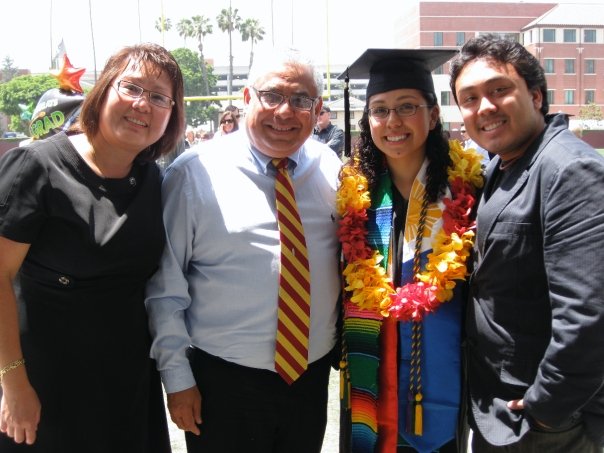
graduation10687313_10102611986045855_5354928903165335935_o

These Are The Parts of Me That Suck

It is probably no surprise to anyone that there is a solid list of things that I am… not good at.

When I worked in a non-profit organization, we were really big about knowing “our work styles.” We took a lot of tests to better understand what we were good at– and what were “areas of growth.” We identified what made us more effective leaders and productive humans.

And I actually really love and appreciate that, because once I did them it made me realize that the things my job was telling me I wasn’t good at were part of why I needed to leave my job.


It’s an easy stereotype, but that’s perhaps because it’s true: I’ve always been a little bit of the black sheep in my house. My parents and older brother are incredibly neat humans. While I grew up in a cluttered house, it was always very neatly organized. My brother is able to juggle and multi-task many projects at the state senate. My mom and dad often catch mistakes quickly as they write.

I am… the exact opposite. My apartment is often a mess (NOT unhygienic– I take out the trash, don’t leave food, clean up messes– but clothes. Clothes everywhere), my desk is covered in hastily made stacks of paper.

These are the parts of me that suck. I am not always good at organizing names or papers. I am often fluttering about, trying my best to get as much down, on the page, and out for feedback as possible. I don’t know why I developed like this, but I’ve always felt that I’d often rather get out my ideas– rough, raw, messy, unwieldy– and worry about the polish later. My best (i.e. highest graded, most awarded, etc.) work is often written hours before it’s due. My most successful, innovative lesson plans appear in my mind at 5:45AM that day.

I don’t mean to say that I’m throwing out papers, emails, etc with no grammar and a ton of typos, but I’ll definitely cop to missing a few commas, leftover articles, and occasional typos in my time. Clearly, the final draft of something really important will get multi-checked with my crazy-English-teacher-grammar lens, but most other things (blogs, informal emails) tend to be done how I speak– imperfections and all.

There are other things I struggle with. If I’m not interested in something, I am very good at justifying “tabling that project” until “the spirit moves me with a new idea.” I’d like to say I’m great at keeping myself accountable, but I need to really love something– my students, writing, running, fellowships etc– to actually do that. I will jam for hours, focused and unending, on something I really want to do. If you force me, though, it might take a little more arm-twisting.

And I can imagine this is annoying, especially when those mistakes ended up affecting something important. I’m not trying to excuse them. They are definitely things about myself that I should and am actively working to improve.

And yes, I’ve gotten better. Sometimes now, when I’m about to leave something for later or rush through it, my mother’s voice floats through my head, sing-song and sweet, saying “haste makes waste, mija!” I groan inwardly, stop, and make sure I properly complete the task (e.g. writing and mailing my rent check) so I get it done properly.

Still, at a certain point, I sort of had to stop and ask myself: at what point do I accept who I am, and work with my natural gifts (and challenges) instead of against them? Instead of forcing myself into jobs that asked me to be good at things that, time and time again proved were skills I lacked, when would I decide to find jobs and projects that actually helped me succeed?


This is part of the reason I became a teacher.

Let me clarify: you will be a much better teacher if you can do the things I listed above well. I’m not saying being a teacher is an easy job (ha!). Being a messy, disorganized teacher can be really annoying for students (especially when it affects grading) and co-workers. You also need to be able to sometimes get things done that you just don’t like.

What I mean is that I realized that my classroom afforded me with an extra set of eyes and ears that would keep me accountable all the time: my students. My classroom isn’t (nor should it be) Ms. Torres-getting-everything handled. It’s not really “my” classroom at all– I see my students as empowered enough to know they can correct me, work with me, and make sure that OUR ship runs smoothly throughout the year.

While being a teacher does ask me to be good at skills I struggle with, those challenges are often overridden by the fact that I really like my students. It’s cheesy, but because I want them to do well, even the parts of my classroom that cause struggle become a bigger priority. I mean, I hate grading sometimes, but man, I love my kids. I know that my consistent grading of their work makes them feel successful, so it gets done (not always as quickly as I’d like, but it does).

Here’s why I think it works though: I’m open about my imperfections with my kids, and I ask for their help all the time. I tell them, often, that I’m not perfect. I let them know that if they see something they think is a mistake, they should tell me about it. “Everyone makes mistakes!” I tell them, we laugh, and sometimes they even help me fix it (hello, teachable moments!). Because I grade pretty often, it gives them plenty of opportunity to ask me questions about why they got that score and correct it in a way that makes sure it doesn’t affect them too much (caveat: I don’t take heavy-hitter grades, like papers, lightly, and double and triple check them before I publish them. It’s only, for example, missing easy homework assignments).

The other important thing: I (try to) take feedback with humor, grace, and gratitude. If they and I both know that, sometimes, Ms. Torres is scatterbrained and needs help, there’s less of a fear that they’ll hurt my feelings if they try to help me. It also means that I need to know that people are trying to help me, and their feedback isn’t meant to hurt my feelings (this took time, but I got there!).

I’m not trying to say I’m going to remain bad at these skills forever, or that I should throw my hands up and say “TAKE ME OR LEAVE ME!” That said, I am trying to get better at leveraging the things I am good at– listening to others, respecting their opinions, being open and vulnerable about myself– to help me be better at the thing I really do love: teaching.


Anyway, this wasn’t the cleanest post, and I’m sure you’ll find a typo or two. It’s been a helluva two, crazy weeks, and I’m just so happy to be home for the next few months, and wrapping up the end of the year strong with my kids.

Fortune Favors the (Thoughtfully) Bold

Three years (and one week) ago, I embarked on what I thought would be the greatest adventure of my life: I moved to Hawai‘i.

I am a cheesy human who likes celebrating small anniversaries like that, so it’s ironic that, each year, I have been off-island on May 1st (and always for a TFA trip!). I always end up celebrating my move to the island by being forced to leave it.


And maybe that’s a good thing. Sitting here, in my parents’ place in Kona (one of the many changes over the past 3 years), I’ve been rereading my blog from that time in my life. Doing a time-warp is always fun, but I was struck not just by the sense of adventure I had, but also how frenetic I now remembered that time was.

Moving to Hawai‘i was, in fact, the biggest, most adventurous risk I had have ever taken. I don’t have close family here, I didn’t have any close friends out here. I was jumping into a job that dealt with organizing things, laughably my worst skill on earth. I was making ridiculous decisions with little thought to the outcome. Continue reading

Teaching While White

Tough, essential questions.

Mel Katz's avatarYoung Teachers Collective

Co-authored by Melissa Katz and Molly Tansey

Screen Shot 2015-04-15 at 5.05.14 PM

This past summer Mia McKenzie of Black Girl Dangerous published a piece entitled “All the White Teachers I Wish I Never Had.” In the piece, she discusses how during her early school years her entire world was Black, filled with family, friends and teachers who supported her academic curiosity.

“As a very bright, gifted Black girl, having Black teachers, mostly Black women, who saw my giftedness and encouraged and nurtured it, meant everything. These were teachers who could look at me and see themselves. They could see their children, their hopes, their dreams. These were teachers who could be as proud of me when I did well as my own family was, who could understand me when I talked about my life, and who knew how to protect the spirit of a gifted Blackgirlchild in a world they knew would try…

View original post 1,945 more words

On Being and Learning Again

I’ve felt… off-balanced lately. A little lost, a little weary and wary. Occasionally, like most folks, darkness comes in and you cannot help but question why it’s there and who causes it.

And while it’s scary, I’m lucky. I’ve seen the other side of darkness enough to know that “Easter will come,” things will brighten. I have family and friends who love me and make me laugh, a job I cannot help but find joy in, a partner who holds my hand the whole time and says, “I got you. It’s okay. We’ll be okay.”

Last night, and in the past few weeks, I have been struggling with the concept of “Enough.” In the NPO or education world– it often feels like I don’t do enough for the people in my life– my students, family, friends. Sometimes I feel like I’m too scared to take on the big challenges because I have this nagging need to take care of myself and do things that make me happy too.

So, on a whim, I found out that Fr. Greg Boyle, one of my favorite writers, priests, human beings, had been interviewed by On Being, one of my favorite podcasts.

I’ve read and listened to so much of Fr. Boyle, and what he shared wasn’t necessarily new to me, but just hearing it reframed again was so essential– I was immediately snapped back to myself. I know what I need to be doing. I know it will take time to get there. I know I must be eager, yet patient in God’s timeline.

I think, sometimes, we want to glance over reflections or lessons we think we’ve “already learned.” Yesterday, I didn’t want to reflect on body image because I thought, Well, I’ve written about that before, shouldn’t I know better?

We are so quick to forget our own flawed perfection means sometimes the lessons need to be restudied and relearned to gain a new, revolutionary potency in our minds. It doesn’t mean we’re silly, merely that we have the fantastically human ability to form and reform new and better connections with things as we grow.

So, with a renewed heart for the work and what it looks like for me, I’m coming out on the other side.

I highly recommend the linked podcast (I always choose the unedited version), and a few favorite tidbits below:

On perceptions of the communities we serve:

So you see how they love one another or there is nobody in need in this community, for example. But my favorite one is — it leaped off the page to me — and it says, “And awe came upon everyone.” So that the measure of our compassion lies not in our service of those on the margins but in our willingness to see ourselves in kinship. And so that means the decided movement towards awe and giant steps away from judgment.

So how can we seek really a compassion that can stand in awe at what people have to carry rather than stand in judgment at how they carry it?

On doing the work:

Question: …what more can I do other than shrugging my shoulders and writing a check?

Fr. Boyle:  Well, don’t stop writing the checks!… but we must obliterate the illusion that we’re separate…How do we dismantle the barriers that exclude? How de we dedicate ourselves, in our own way… how do you participate in the birth of a new inclusion, where nobody is left out?

And that takes humility! …Humility asks the poor on the margins, “What do you need? How can I help?” 

Hubris says: “here’s what your problem is and here’s how you fix yourself.”

On mutuality in “service”:

I’m not the great healer and that gang member over there is in need of my exquisite healing. The truth is, it’s mutual and that, as much as we are called to bridge the distance that exists between us, we have to acknowledge that there’s a distance even in service. A service provider, you’re the service recipient and you want to bridge even that so that you can get to this place of utter mutuality. And I think that’s where the place of delight is, that I’ve learned everything of value really in the last 25 years from precisely the people who you think are on the receiving end of my gifts and talent and wisdom, but quite the opposite. It’s mutual.

On the work as Christ did it: 

I haven’t found anything that’s brought me more life or joy than standing with Jesus, but also with the particularity of standing in the lowly place, with the easily despised and the readily left out, and with the demonized so that the demonizing will stop, and with the disposable so that the day will come when we stop throwing people away.

Rolling Thunder: Falling In Love With My Thighs

NOTE: This piece originally ran 3 years ago for The SF Marathon, and was edited for clarification and grammar.

But, after trying to love myself today, post-half-marathon, it felt worth revisiting.


When I woke up last Tuesday, I knew I shouldn’t run. I had injured my leg at Surf City the week before, and it wasn’t feeling any better. It was tight and kind of painful and none of it felt right.

After a few years of running, I frankly should’ve known better. I should’ve known that, even with a marathon 5 weeks away, I should rest. No, the marathon wasn’t what got me out of bed and got me to put on my running shoes that morning, despite my better judgment. Confession time:

I woke up that morning feeling a little fat.

Now, that’s a big thing for me to admit. Firstly, admitting that you feel fat or even just not-great is not sexy or becoming in any way. I try to be a big believer in loving your body (and, generally, I do). As an advocate for positive mentality in running, I also am a big believer in being happy with who you are, as long as you’re healthy and you feel good.

Still, with all my positive attitude and happiness about running and the self and blah blah blah, I have to admit that, as a 24-year-old woman who lives in Los Angeles, sometimes I wake up feeling a little gross.

My struggle with weight isn’t really a traditional one. Sure, I grew up in Laguna Beach, California, home of the perennial beach bunny. As a chubby kid, I definitely didn’t fit that mold, but I was never really picked on for my weight.  My parents were very attune to what kids deal with, and always made it a point to tell me I was pretty and loved. I’ve even been lucky enough that I’ve dated generally good guys, and have yet to be with a guy who has ever said anything negative about my weight– a huge bonus for a curvy girl.

Still, even though I had a lot of support systems and luck, I’ve struggled with my weight since I was a kid. I always felt kind of chubby and like I was never going to be skinny enough to be like “other girls” (I don’t know who these other girls were).

I remember, in middle school, a girl in my class put her feet together and her thighs didn’t touch. This blew my mind.Are you kidding me!? I thought. How can her thighs not touch in the center?! My legs touch all the way from my calves up!

Cut to my senior year of college. I was chubby and unhealthy throughout most of college (I recall lots of cookies-for-dinner nights). That year, though, I began working out– nothing crazy, just a few hours every week. I noticed my body changing. I was way hyped. I started eating healthier too. I dropped a few more pounds.

Then, I got engrossed in the stress of my senior thesis. I was so stressed, and felt so out of control that I pretty much stopped eating. Looking back, I estimate that I ate under 800 calories a day. I pretty much subsided on 4 or 5 cups of green tea, and a handful of grapes or a few pieces of fruit every day. After a few months, I noticed that my clothes were a little loose. Without having really looked at myself in a while (since I was so caught up in my work), I jumped on a scale. I was far below my goal weight, the lowest I had ever been in my post-adolescent life. I finally looked at myself in the mirror, expecting to look glowing and thin.

The girl looking back at me was a little surprising.

I had dark circles under my eyes.  When I lifted my shirt up and raised my arms, I could see all my ribs– I could count them. My collar bone stuck out in a really weird way that I didn’t like.

Ironically, my thighs still touched.

When I started training for marathons, I began looking at my body in an entirely different way. My body had always been this thing I fought against. It was this thing that I hated and that didn’t do what I wanted it to do and didn’t look how I wished it would look.

As a runner though, it was hard to hate my body and be able to succeed. My mind and my body had to work in tandem.

My body was the vehicle, and when I mentally pushed myself to run 15 miles and my legs responded by actually doing it, I finally started feeling gratitude for what my body was giving me. When I had the mental elation of burning past another runner in the last half mile of a race, it was those muscular-always-touching calves that I had to be thankful for it.

I actually started to like some things about my body. I felt good about myself. No, I was never going to be a size 0, but, after training, I could run 26.2 miles. There are definitely some trends that these hips will never pull off, but they are able to get me through 5 hours of running straight.

I knew my body image had changed one morning, when I was running before going to work. I looked down my legs. Each time they hit the pavement, I saw my quads flex on impact, pushing me forward every step, every mile.

ThighsThen, I surprised myself. My thighs are definitively not lean, tiny, not-touching thighs. I looked down at my now muscular thighs, and the first thought that came to mind was:

Damn. That’s pretty hot.

I can’t stress enough how much running has changed the way I view myself, and I hope it’s a message that I (or you!) can pass along. I wasn’t the only middle-schooler that struggled with my weight. Recently, the National Heart and Lung association polled a group of girls. 40% of them said they had tried to diet.

They were between 9 and 10 years old.

It’s not easy on men either. The same organization polled a group of fifth grade boys, and 45% of them said that they had felt dissatisfied about the way their bodies looked.

These issues, this battle with what our bodies are and what they can mean to us starts young.

When you work out and take care of your body, it’s important to not only know your weaknesses and set goals, but to show a little love towards yourself too. After finishing my first marathon, I felt limitless. I was the kid who had cried to get out of the weekly mile, and now I had run father than I ever thought I could. I had my body to thank for that feeling.

So, as I take a little break from running (oh, yeah, that run I did last Tuesday? I pulled my calf. Learned my lesson, huh?), I’m using it as an excuse to fall back in love with my body. I sit in the jacuzzi and actually relax for the first time as I love my body by letting it heal. I look at myself in a new dress, and try not to feel guilty or boastful by thinking Huh. I look good. I do cheesy, clichéd things like yoga in the park while I enjoy a beautiful day.

Oh, and I maybe reward it with some frozen Cherry Garcia yogurt too.