I Am (Also) the Blood of Warriors: On Veterans Day

I’ve been discovering a lot about family lately.

In doing so, some questions came up, but so did a lot of good stories I just didn’t know.

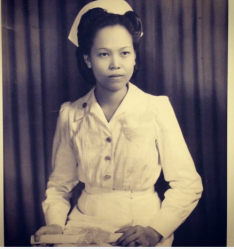
My grandmother, Rosalina, a 1st Sgt in the US Army during WWII, before she ever became a citizen. She met my grandfather while he was a guerilla fighter during the war.

My grandmother, Rosalina, a 1st Sgt in the US Army during WWII, before she ever became a citizen. She met my grandfather while he was a guerilla fighter during the war.

My grand-uncle Manuel and my great-grandmother.

My grand-uncle Manuel and my great-grandmother.

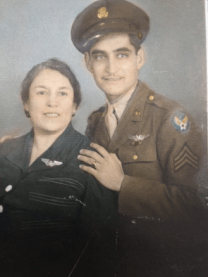
My grand-uncle Manuel, who is a WWII and D-Day Veteran. He flew in B16 bombers during the war.

My grand-uncle Manuel, who is a WWII and D-Day Veteran. He flew in B16 bombers during the war.

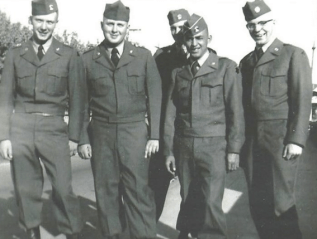
My abuelo, second from the right.

My abuelo, second from the right.

At a time where I am still trying to understand my place in this country, it is nice to have these stories: ones where my family grabbed life by the reigns and decided they would do their best to master their fate.

Still, they are also complex stories: they came back from the war and still struggled to understand what their lives here meant. They still worked themselves to the bone to ensure upward mobility in a system that, despite their veteran status, consistently tried to deny them of it. The resilience that helped them survive the war and the military had to be channeled into navigating a system that, while they had fought for it, was also in some ways not built for them.

If America is built on the foundation of stories like my family’s, then I am only more inspired to keep pushing this country towards true greatness. We have been warriors, problem-solvers, and risk-takers that fought demons externally for generations.

Now, it’s time to keep wrestling with our internal demons too.

The Small Sprigs of Hope

This post starts with a life update, since it’s been a while.

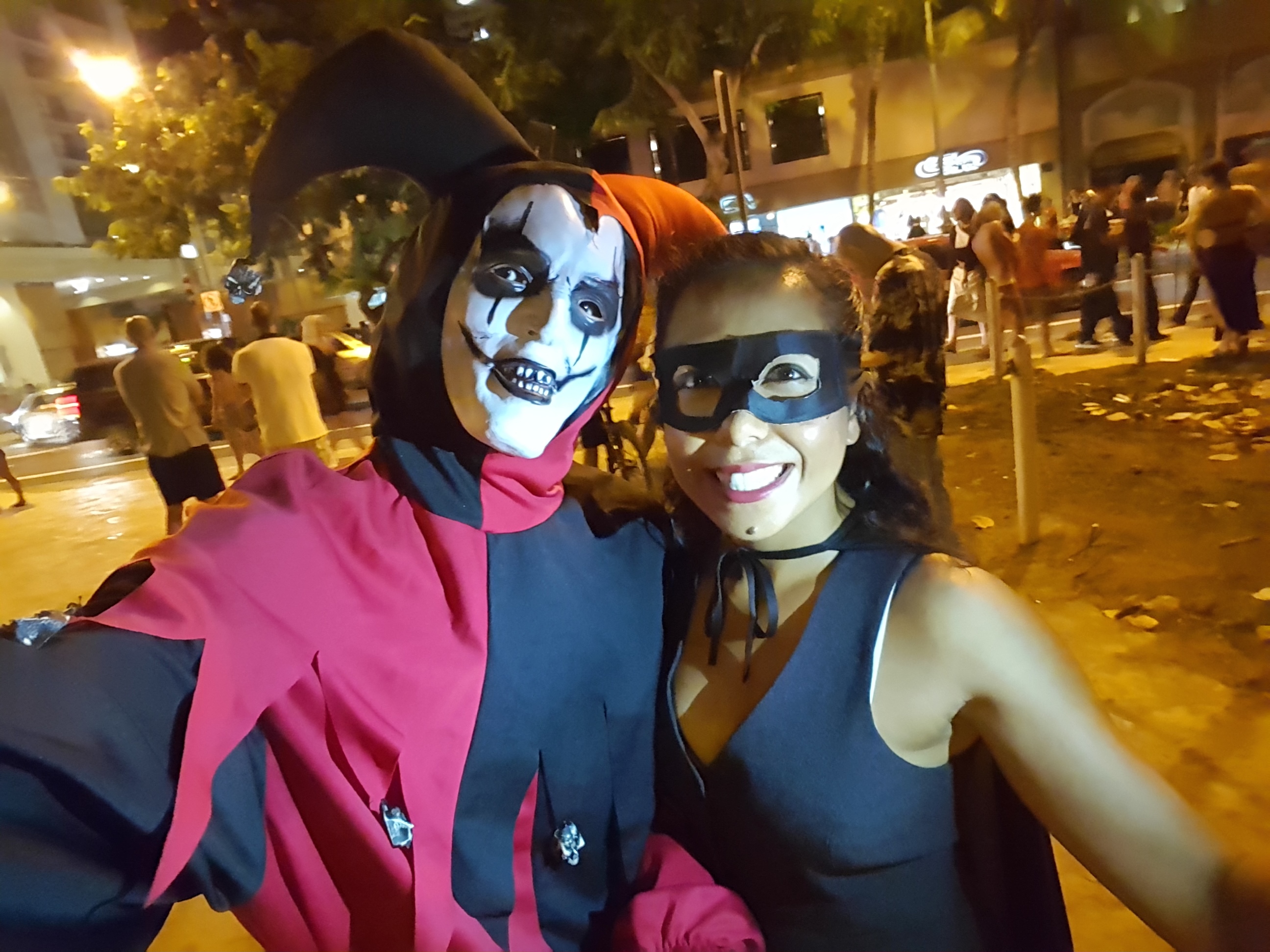
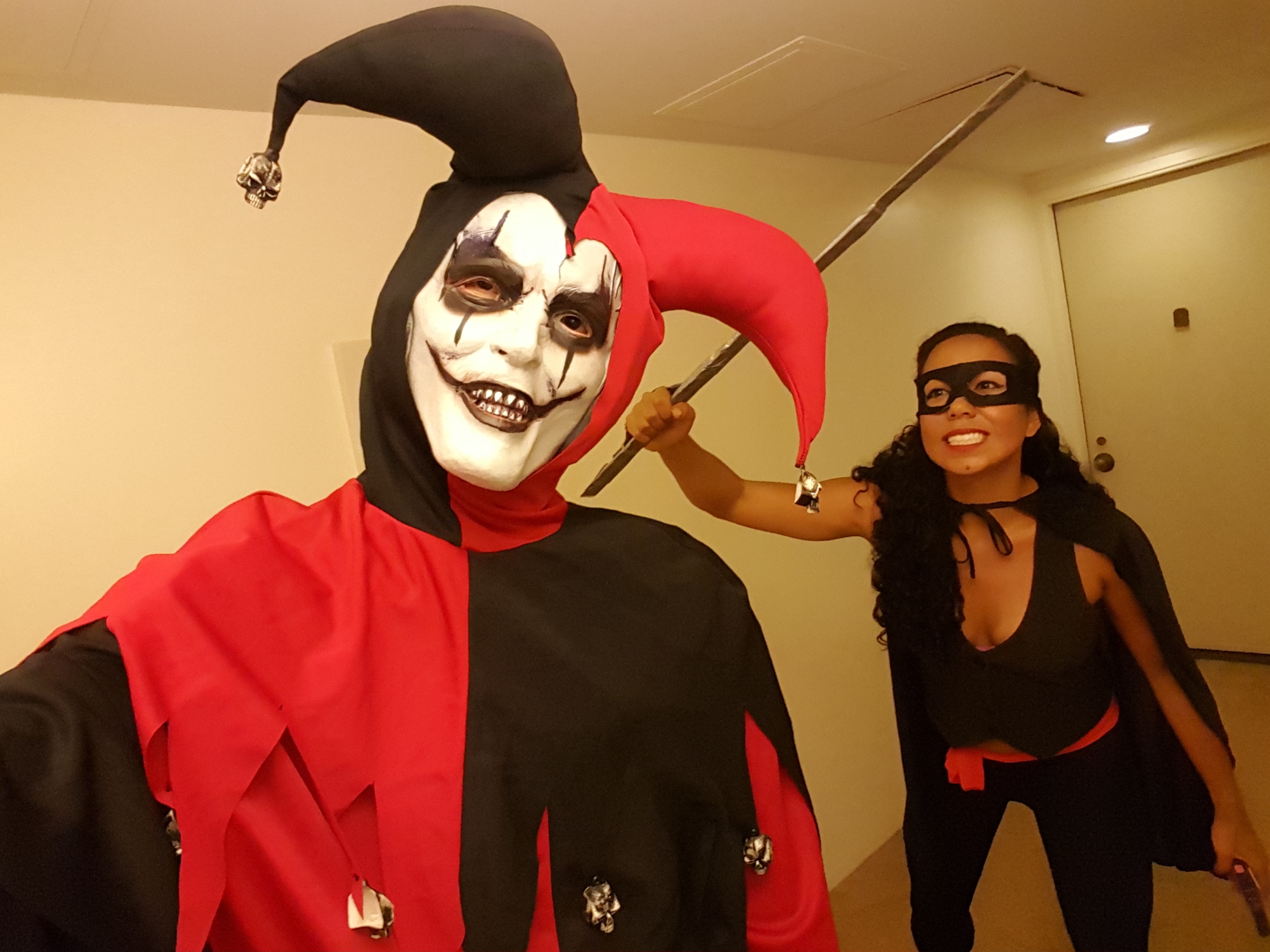
This past week was Halloween. Normally, Halloween is a bit upsetting. It’s usually got a lot of crappy, racist/sexist/culturally appropriative costumes that make me squirm or make me angry. This year, though, Halloween was pretty great.

halloween1halloween2

My students were adorable; every costume was fun and not offensive. Huzzah! The only Día de Muertos display came from our Spanish teacher, who dressed as La Catrina and taught kids not already in her class about the actual holiday.

Later that night, my guy and I went out in Waikiki which, while crazy, was actually a pretty great time.

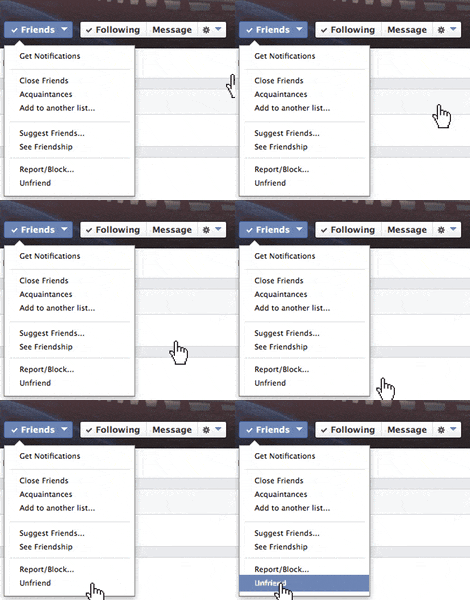
Then, of course, I just had to go on facebook.

Which, you know, wasn’t so bad at first! After understanding what facebook is for me, I’ve come to either just accept things or hit that “unfollow” button, so I can sort of disengage (which I imagine others have done to me). I don’t want an echo chamber, but I think ensuring my space and time are what I need is also healthy.

Then, I stumbled onto the page of someone I had unfollowed already. I should’ve known better because the first few posts already had me like

and then reading the comments I was all I sighed and felt some part of my psyche beginning to suit up. I felt compelled to call them out (and perhaps complicit if I didn’t). Everything I was seeing was so against what I believe to be right, and I have spent so much time in the online world having these discussions, that I instinctually began readying myself to join in a sprint of having this conversation.

Then, I stepped back for a second and thought,

Did I really even know this person? Did I actually care about their opinion or if they changed? If I had unfollowed them in the first place, why was I about to jump into the pit of ridiculous argument with no real outcome? Was it worth my time, energy and frustration?

So, I did something different.

There was something so freeing about this moment. Part of it was that, as I’m growing up, it’s good to realize that I don’t need to deal with everyone. Some people just need to be let go.

The other, though, is that I found a small sliver of hope where I often struggle. I normally see conversations about appropriation or privilege and cringe. I feel angry and, mostly, helpless.

Lately, though, there’s been a shift within me. The more I see people having these conversations, those of echos of hope have started to reach me. Even more importantly, though, is that the more I have these conversations with my students, the more confident I feel that we’re pushing each other towards actual change. 

Last week, as my 7th graders read The House on Mango Street, they got a brief lesson on White flight. Today they’re exploring gender identity and expectations. My 9th graders are deep into To Kill a Mockingbird, and already making connections about bias, perception, and racism. They are pushing me to think more deeply. They are asking the questions, and even if we don’t agree, I’m so proud of them for thinking about it.

So, that’s fine, person on Facebook. Let your fragility allow you to be complacent as a half-way “ally.” Accept cultural appropriation and enjoy the commercialization of my people this Halloween.

For now.

I’m not stressing. On a larger scale, I am feeling more assured in Dr. King’s words about that long arc bending towards justice.  I am believing, more and more, that tides will turn. I am hopeful for the day when what you perceive as “small potatoes” will get called out as signs of larger beliefs we don’t accept anymore. So, someone else can teach you another day.

Who knows? Maybe it’ll be one of my students.

Bad Writing and Broken Hearts

Below is a piece I’m working on. I don’t know how it’s going, but I’m having a hard time working on anything. 


I like telling stories.

That doesn’t make me special. I’m a sometimes-writer and full-time English teacher. I have spent years fitting events into narrative structures: dynamic characters, dramatic tension, nuanced relationships wind through conflict and still end with a neat resolution. My world, most days, is spent somehow trying to craft something that fits into a narrative.

I thought this was just craft, something I did on paper or in the classroom until someone reminded of a small, white lie I had written about them. When I apologized, they simply said, “You like making things fit your story.” It wasn’t mean, they were just making an observation. At that moment, it clicked.

I have been telling myself stories for years.

Nearly every relationship I’ve had is subjected to hours in the tumble-dry cycle of day-dreams. I take the smallest tidbits, find the narrative and fill it with so much hot air it floats away with the rest of my imagination.

My narrative habit has been curling its way through my brain, around my heart, and into my actions since childhood. A gossamer string, my desire to adapt my perception of reality– then manipulate that reality to my perception– has been woven into my life since long before I could understand it.

It’s in adolescent journal entries describing, in excruciating detail, the real meaning behind my crush putting his hand briefly on the back of my chair as he talked to someone else. It’s being sure that, when his “ocean blue eyes, like a stormy sea” (a line, no doubt, purloined from some bad fanfic I had read on the internet) locked with mine, it was because he was seeing something deeper in me. It’s embedded into the fabric of time I’d spend skulking around corners at school, hoping to “accidentally” run into some guy.

When, somehow, I would convince that crush to actually date me– with obvious flirtation, with praises and pretty words– I was still creating storylines for them that would, eventually, end.

Storyline: A young Mormon missionary falls in love with a Catholic girl. He proposes. She says yes. He goes on his mission and, somehow, when he returns, they find a way to work through their religious issues and have a happy life.

In reality, six months after he left, the heady high of my first kiss and first love had worn off. I was sixteen when he gave me a ring. I was seventeen when I sent my missionary a Dear-John-email (we weren’t allowed to call or see them in person, or I swear I would have). He begged me to accept his God into my heart and make things work. I overlooked his messages. I returned his ring and most other gifts he left me. 

He’s married now, I think. He blocked me on Facebook.

I did this a few more times in high school: the track star who tutored me in math and left me when he realized our time was up. I threw a fit (this was not part of my story) and sobbed, though deep down I agreed. The fellow thespian, who I badgered to go out with me my senior year. He wrote some nasty things about me, we made peace and parted ways. He recently married man in San Francisco

This, of course, is natural for many high schoolers. As a teacher now, I see myself in so many sixteen-year-olds skulking around corners, hoping to bump into someone. I see the students hoping to find validation in me as their teacher or their friends or some relationship, and sigh and tilt my head and wonder how anyone put up with me at that age.

What is more difficult to realize is that I didn’t leave the practice behind in my school like I thought I did. I see now that I have been weaving webs of stories and heartaches long past my graduation.

#WhyIWrite – Survivors and Monsters

It’s been a hell of a week, but one that seems to be ending on a happy note. Our school’s WASC visit went well, and I’m happy it’s Friday.

I’ve been fairly quiet on social media, simply because I’ve felt bone-tired most of the week. It’s that time of year where both the students and teachers are crawling through to Thanksgiving break, just doing our best to find the moments for joy and laughter when the gloomy clouds of the October/November Doldrums break.

I did catch the #WhyIWrite tag (which José Vilson wrote about eloquently from the perspective of an educator). I know I have that piece sitting somewhere inside me, but I’m not in a space where I can dig it out.

It did make me think of two reasons, though.


The first is that writing, in many ways, is an act of survival. Like lots of people (especially, let’s be real, women of color), I have overlooked, ignored, or been unable to recognize a number of different, small traumas in order to live in white dominant culture. Speech changed, clothing changed, body image shifted. Writing has helped me parse through some of those mixed feelings on paper. It helps me find the space to be angry, be confusedraise my voice and also make a safe-haven for it that can be reflected on. Without being able to put those things in one space– to cut, copy, paste, realign and find new ways to put it out there– I don’t know that I’d be able to deal with it.

The second reason, though, is to turn the mirror back on myself. Given the above existence, my own penchant for drama would make it easy for me to always see myself as the victim, the heroine, the protagonist of the story.

The problem is, life doesn’t work that way, and I’m not always the heroine. The white space of a blank page can be unforgiving and pushes me to ask questions of myself I may not normally pose. When I write, it forces me to turn back to a situation and ask, “What happened here?” At times, I come as the reflective survivor, returning to an emotional place to work through it and eventually heal.

Sometimes, though, I am returning to the scene of the crime.

I am not perfect, and when I ask, “What happened here?” I am often forced to reconcile my own shortcomings. I am made to see the places when I have hurt others, silenced voices, or simply been a less-than-stellar human being.

If writing is rewriting, then writing is also the opportunity to hit rewind and play, again and again, on the memories we have and the stories we tell. It is easy to read a situation the first time and see ourselves as the noble dragon slayer, overcoming and persevering through a tough moment.

Occasionally, we realize that we were not the slayer, but that some part of us is the creature to be slayed. We understand that it is not our job to play victim or heroine to someone else’s monster, but that sometimes, we realize that we are the monster instead.

I Am the Blood of the Conqueror; I Am the Blood of the Conquered

I didn’t know the true extent of Columbus’s reign of horror until a few months ago. Sitting in a Nashville library, I read accounts of the things Columbus and his men did and felt sick to my stomach.

Columbus and his fellow “conquerors” were assholes. There are a number of sources that show this. It’s easy (and correct) to hate it all. The level of prestige bestowed on them is, frankly, disgusting.

So, when I began to read, I felt ill. Like lots of people, I knew about the general horrors of the conquistadors, yet reading primary source writings added the necessary detail that erasure often removes in order to make things palatable.

There was also rage. A sickening, black cloud of it stormed in behind my eyes, as it usually does when I read the real history of things. Normally, that rage has a name: white supremacy, slavery, segregation, police brutality, racism, privilege, bias. I can normally pin that rage to something, burn that effigy as things to stay away from and consciously choose to try and rid myself of, to work day and day to scrape out internalized oppression and beliefs.

You can’t scrape bloodlines clean, though.

When I first heard the story of Columbus as a kid, I have to admit it felt exciting. This guy was “discovering a new world,” on ships with Spanish names. Up until then, it felt like I hadn’t heard a word of Spanish at school. Then, all of a sudden, we were talking about how the Niña, Pinta, and Santa Maria were bastions of adventure and discovery, and it was the first time anything that vaguely smacked of my home heritage had a place of honor in the history books.

I am Mexicana and Filipina. I have been raised to be proud of the centuries of ancestors who came before me. Both cultures place a strong emphasis on not forgetting familial and cultural history.

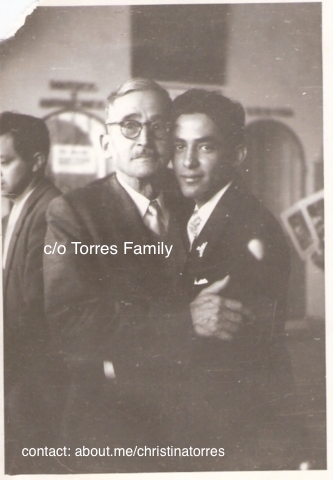
torresfamI also come from two “conquered” peoples. Spain—Columbus and men cut from the same cloth— came to both and did unspeakable things. They also, perhaps horribly, mixed bloodlines with those countries. They mixed culture, music, language, and food with those people. I am a “Torres” on my father’s side, and an “Estrada” on my mother’s. A photo of my paternal grandfather and great-grandfather are undeniably Spanish-influenced; the family moved to Guanajuato from Spain in 1765.

I want to hate everything about the conquistadores, yet they influence so many things I celebrate. I speak Spanish, I have a Spanish last name and undeniably Spanish blood passed on as a result of the conquest. I have danced the Maria Clara, twirling a lace mantilla that represented a “beauty” and “elegance” forcibly placed upon a nation of Filipinos.

I know, now, that the dance and the language and the food come as a result of horrendous oppression, yet I still cannot help but live that culture daily. As Richard Rodriguez once wrote, “I am the same distance from the conquistador as I am from the Indian.”

Of course, I read that quote and also realize that I am one of the millions who have and are still embodying this duality, this internal war. I am certainly not the first. Rodriguez finishes that line with the reminder that “righteousness should not come easily…” to any of us.

I don’t claim to be a pillar of righteousness, but attempting to figure out where I am placed in the tangled web of this timeline is new to me. It is strange to honor a history, all the while knowing its existence comes on the backs of an oppressed people. It is also difficult to properly place my anger on something that feels so much a part of who I am. It feels impossible to be Mexicana and Filipina and not be Spanish as well.


This is frustrating, but I am ultimately grateful. The internal war I fight now only fuels my fire.

This is the danger of erasure. It is criminal that, as a child, Columbus was the closest I came to Spanish role models at school. We must teach the truth about those periods in history so that we do not venerate those who are unworthy of such a place in it.

We also shouldn’t allow students to live in a world where the only history we present is one that paints them as a “conquered” people. I don’t want my Latino or Filipino students to see their cultural history only pockmarked with death and oppression. None of our students should only be shown the single story where their people “lose.”

I had, more recently, looked at the history of both cultures as “tragic.” With a furrowed brow, I condemned the act of the conquistadores on the “poor natives,” wondering what we would have seen had they not been allowed to plunder as they did.

I still feel that way at times, but now I am also filled with an intense pride. Mexicanos and Filipinos cannot be defined by our oppression: we are the result of adaptation and survival. We were conquered and endured and created something beautiful in the process. We took horror and tragedy and turned it into song, dance, food and, somehow, joy.

That is something to celebrate. That is the history that flows in my veins and fuels me each morning as I work. This day, I condemn the acts of the conqueror and refuse to center on them. Instead, I will work to re-center and celebrate the stories of the people who rose from those flames and danced.

Exactly Where I Need To Be: On 28

Well hello, there, 28. You’re three or so hours away on Hawai‘i time, but I’ve had some red wine and a delicious calzone, so let’s do this right now.

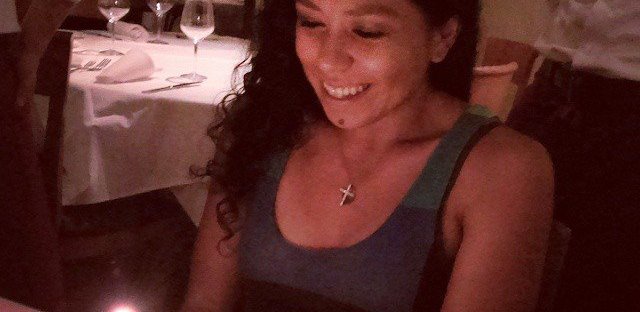
bday

Last year’s celebration

Normally, I come into my birthday very reflective. Last year, I wrote about wanting to accept things as they are.  I like to think I did that.

This year, as I move into the last few years of my twenties, I realize that… I’m empty. Not in a bad way– October is the first full, meaty month of fall. The time of harvest, reaping the benefits of what was sown in hot summer months. My birth month is one of patience, balance, and hard work. The pregnant pause of the year. It’s not the beginning of fall, nor is it the holiday season. That’s okay. I like living in the pauses.

I normally lament how rushed and tired I feel around my birthday, but this year, I am choosing to celebrate it. I see now that my exhaustion, my emptiness, isn’t a sign of lacking. This year, and hopefully from now on, it is a sign of preparation for the new. We cannot fill a cup that is already full.

I come to a new year of life completely spent: I have tried to give my words, my voice, my work to my classroom and loved ones. I have tried to ensure that I don’t refuse new lessons because I am so full of old ones that may no longer serve me. Instead of  feeling full and satisfied, I quite like the idea of coming into a new year on earth empty and open: there is a hunger in my belly that is still not satisfied. I am excited to spend another year filling it again.

So, 28. Here I am. I am blessed with amazing family, friends, partnership. I understand now, more than ever, what the work feels like (I am always adapting to what it looks like). I am eager to see what comes next.

I’m moving away from making highfalutin plans for 28. Instead, I am excited to spend this year working, listening, and reveling in the joy and stability my life, love, and work has brought me thus far. If I learned anything this year, it’s that I am best served by reading my life like the waves: there are times to savor the momentary calm, wait within pause as a set comes in, and there are times to ride the waves into something marvelous.

Here’s to reading the ocean. Here’s to trusting my gut. Here’s to 28.


PS: I am still blogging over at EdWeek. I hope you come and check it out. 🙂

Cross That Line – On Viola Davis and Representation

When I was sixteen, I was sure I was going to be an actress.

I ended up initially getting admitted into USC as a theater student. There are lots of reasons I didn’t continue with a career in acting, the biggest being I realized I didn’t actually love it. It was also clear from my first few years in “the industry” just how few stories there were for people who looked like me. The ones that did exist were only showing in then-small theaters like CASA0101.

It also felt like the stories that did exist would never let someone like me in them. “You’d make it a ‘Latina story’ if I cast you,” one person told me, apparently meaning it wouldn’t be marketable. I was asked if I could have a more “cholo” or “ghetto” accent. This is what it means to be Brown in Hollywood (and I’m sure it was far worse for those who pursued the career more seriously).

I have no doubt these structural issues continue. This is why seeing Viola Davis’s Emmy Acceptance Speech last night warmed me so much:

Davis is… amazing. She not only wins, but she uses her platform to call out systemic racism in Hollywood. Davis quotes Harriet Tubman and provides historical context for her speech, and she shares the win with other Black women.

There is still so far to go, but the sixteen-year-old actress in me smiled. Her speech is a source of strength and light for all young actresses and women of color out there. Viola Davis’s win and her subsequent speech show us that change can and must happen, because we will keep demanding it. Stories from people of color matter, and we deserve to play roles in those stories.  As Davis points out, these stories have the power to “redefined what it means to be beautiful, to be sexy, to be a leading woman, to be Black.” Her win confirms that the power of representation to expand the mindsets we can have about ourselves (and that white media will have about us).

Her speech also reminds us of this important truth: the work continues, and we win when we call out tough truths and support each other along the way. Bravo.

Teacher-Student-Human– An Embodiment of Love

“I’m worried I’m not asking the right questions,” I admitted to a colleague a few weeks ago. My school’s curriculum asks us to read aloud with our students and stop to question or guide them as we read. “Or, maybe I’m not asking them correctly?” I scrunched my face and tilted my head.

While it’s my fourth year in the classroom, it’s only my second year at my school. Our curriculum, which was designed and researched by teachers at my school (including my colleague) years ago, is wonderful but unusual to me. I don’t always know what to ask students, and I was worried that I go off on tangents that don’t properly teach them literary techniques.

Bill, who has been at the school for nearly thirty years and helped create the darn thing, is only understanding. “It’s really hard,” he says, “and there’s no right way.” Then he pauses and asks, “Why do you like the books?”

“What do you mean?”

“Well, you chose them for a reason. You should stop to point things out to students about why you like the book. The author can speak for themselves. We’re teaching our students how to love reading.


It’s been a long week, and with all the field trips I’ve gone on or chaperoned, both my kids and I have noticed my absence.

This year, I’ve been very lucky to have a sense of freedom and ownership of my classroom that I lacked my first few years. Yes, this gives me a sense of professional worth and dignity that’s an important factor to teachers staying in the classroom.

Moreso than that, however, is that it reminds me how much love is at the root of all of this— students, why I teach, even the content. Bill, who I consider a mentor, often reminds me that “the canon should be the books we love to read.” Kids can tell when we love things, and that level of authenticity, of acknowledging that I’m not this automaton teacher who forces “knowledge” down their throats, is key.

Love is a huge part of our humanity, and we need to share that with our students if we’re asking for theirs. I hope they know I still learn every day, often from them (I do my best to show them that, too). I hope my students see me fangirl over a story we’re reading or something they write or say. I hope they know I want them to be a fan of something too.

In reading Jose Vilson’s reflection in “The Eleventh Honeymoon,” I was struck by his reminder to acknowledge the “totality” of what we do. It’s not facts or definitions. It’s a whole human experience.

I am very tired this week, but I would be lying if I said that, even in this state, even in my second-year-back and fourth-year-in mindset, I love what I do very much. I laugh quite a bit nearly every day. I am trusted and cared about and for by a group of small (and not-so-small!) humans who are much, much more brilliant than me. I wake up most days and know, with certainty, that I love my job. 

Is there anything more blessed than that? Is that not grace, this fortuitous stumbling into the confident joy of knowing one’s vocation, in action?

So now, I am trying to trust myself. When I take the tangent to connect The Giver to the pathways of revolutions or To Kill a Mockingbird to #IStandWithAhmed, I feel good about that. When I also stop to nerd out about the metaphor in a sentence, I’m okay with that too. I want them to know I’m not just teaching them, but trying to share with them what I– as a student, reader, and human, just like them– experience with that book.

If anything, I hope my students see it as an olive branch, an offering to make this a space to be excited, be strange, and fall in love with something in a story they may not have thought to notice. I hope it lets them know that when they take that leap, I’ll be there cheering them on. If we do that, I think it’s a pretty good year.

Run Your Race: Reflections After the Kaua‘i Marathon

I don’t usually write race reports, but I’m giving this a shot! It’s also included with a reflective post, so it’s less streamlined, meaty, and free-form than what I might normally post. Just to keep it clear:
Intro
Reflections
Stats and Race Report


An Intro

I landed on Kaua‘i expecting the worst.

Obviously, the island is gorgeous. It was muggy, but jumping into the car with my parents was a breath of fresh air I desperately needed. If I had shown up just to spend a weekend with them, it would have been a sense of peace, of coming home.

But there was this race to run. A marathon with a reputation: picturesque and full of aloha, but with heat and elevation that would demand your respect and push you to your limit.

So, I showed up with one goal: finish. Just get the darn race done. I was already nursing an aching left hamstring and twitchy knee. I had failed to get in a twenty-miler. This wasn’t a body built to win. I was here to enjoy the view and say I did it. If I survived, it’d be a miracle.

I’m happy to report that I survived and, surprisingly, did much better than I thought. By far the best part was having my parents at the end.


Reflection

I had a lot to think about this race. With school getting into swing, working on a number of projects, starting up The Intersection, and navigating some other life-work-things, there’s a lot of… stuff.

The Kaua‘i Marathon came at just the right time for it. Interestingly, I ran this race with almost no music playing. The only time my headphones bumped was mile 24 to 25 (a beast of a hill at the end). Besides that, I was in my own head, figuring things out and coaching myself through a very difficult race.

I usually use mantras when I run. During my first marathon, I ended up with a pacer who coached us all to chant, “I am strong, I have energy, I can do this.” I also used one from a friend, “smart, strong, focused,” to stay on track.

This marathon, I had three that have stuck with me and become part of a larger reflection I had after the run.

  • The first was “run your race.” I used this a lot at the beginning, and I’ve said it and heard it said to student runners. It’s a good reminder not to compare what you’re doing to the runner next to you, especially in an endurance race. When we see people passing us or surging, it’s natural to want to try and catch up. Sometimes, we have to fight that urge.
  • The next was a recitation of The Paradoxical Commandments, and whatever variation my run-addled brain came up with. When my adrenaline gets surging, it’s easy for me to create a competitive, even nasty internal monologue to push myself forward. I didn’t do that this race. While reflecting on some personal events in my life recently, the phrase “love them anyway” kept popping into my head.
  • Finally, for some reason, each time I went up a hill I kept repeating, “It might get some, but it won’t get me” (“It,” I’m assuming here, is the hill. Or the desire to walk up the hill? I really can’t remember.).

So, here’s what I’ve been thinking about: If we know who we are and trust in our abilities, there’s no reason to seek approval or validation from anyone else on the course who hasn’t earned that privilege. I wrote about this recently, but I’m beginning to trust myself a little more and have a better sense of what it means to follow my own instinct and integrity.

The Kaua‘i Marathon put these ideas into physical practice: I had to settle in and run my race. It would have been easy to give in to the desire to be angry or frustrated while in pain during the race– lots of people do. By refusing to give in, I  stayed true to myself and was able to stay positive throughout the race. I ran nearly all of it with a smile on my face (something spectators lovingly noticed, which pushed me to keep doing it!). That’s the kind of person I want to be and be remembered as.

When we choose to put ourselves out there online (or in any space), there’s a natural tendency to seek validation or acceptance. Many of us share our voices because we hope someone else as felt what we have, or appreciates what we have to say. When that doesn’t happen, it can be very tempting to beat ourselves up or change who we are (or the persona we put out there) in order to be easily categorized and, therefore, appreciated.

At the end of the day, though, the best we can do in any situation is seek joy and truth in being wholly and completely ourselves. As silly, angry, bubbly or blunt as that may be, as unlikeable as those people sometimes are, at a certain point all we can do is run our races, love and move past those who don’t like it, and try not to get pulled away from our own course. 


Stats and Race Report

Warning: This is long and was mostly a nice exercise for me to reflect on the technical aspects of running this race.

So! I finished:

  • 29th overall (out of 255)
  • 9th female overall (out of 20)
  • 2nd in my division (F25-29, out of 11)

Honestly, Kaua‘i was one of the toughest marathons I’ve ever faced. I really had no idea how difficult it would be until I was in the middle of it, fighting through.

My parents and I got to the race at 4:45 AM, a little over an hour ahead. Like I’ve mentioned, having them there was a huge upside to this race, and they walked with me to the start line as I tried to get calm. I was worried I had entered this race day all wrong: my body still hurt, I had eaten late last night and was worried my stomach would be tricky, and I didn’t know if I had properly trained for this.

Still, the darn thing had to get done. I crammed a quarter bagel with PB into my mouth, tried to use the restroom, and said good-bye to my parents.

The race started beautifully, with an ‘oli celebrating and thanking the island for hosting us. I was struck by how marvelously small (and well-run!) the marathon is. With only about 1,500 participants for the half and full race (and only 300 for the full marathon!), the setting was far more intimate and grassroots– and completely unlike the mayhem and glitter of the LA marathon.

We were sent off, and the first few miles were spent just trying to get into my body. My left hamstring began feeling tweaky immediately, but I did my best to breathe through it and not let it rattle me. The sun came up around mile three, and the only thing I kept noticing was how beautiful and green the scenery was.

At mile five, we entered the tunnel of trees. I had driven this part with my parents and remembered my dad’s wise word to “mind the potholes!” A few folks didn’t and tripped. There really aren’t words for how lush, spiritual, and breathtaking running quietly through these trees was. The only thing I noticed was the breath of my competitors, the sounds of beating feet, and the wind in the leaves.

Around this point, though, is when I noticed people beginning to drop. Surprisingly early, even for half-marathoners, but I have no doubt the heat played a role in that. This was my initial reminder to breath and run my race. The first six miles were all a gradual incline, which had seemed terrifying. They actually weren’t that bad. I like hills, and the slow climb up let me find a rhythm to move forward

The race then leads through a net-downhill. First, through some gorgeous farm land, then through a residential neighborhood where locals very sweetly cheered us on and clapped for us. I really started to find my groove here. I was smiling, thanking volunteers each time I grabbed water and was surprised that I hadn’t felt compelled to listen to music yet.

Around mile 8, I also popped my first Gu. I know, about 40 min late. I normally train without water or fuel in case I need to run during a zombie apocalypse or actually forget gels. This also helps make sure that my races are always better than my practice runs (I’m not recommending that to anyone, though. You should always stay properly fed and hydrated).

Mile 11 is where the course splits between the half-marathon and the full marathon. I joked with the volunteer and asked if I could change my mind. He laughed and said to stick to my race.

I understand why I needed the reminder. As soon as you make the right turn and decide to run the full marathon, the course slaps you in the face with a brutal half mile climb that was best run as a “slog.” It’s empty, and so there’s no one else on the course but you, the other runners, and everyone’s collective pain. This is where, mentally, mantras became huge.

After a half mile to recharge with a flat and an aid station, the course beats you up again with another hill! It was mentally so hard to push past this point, but I kept deciding that I would not get bogged down by the hills (though I did walk a few times). I eat hills for breakfast, I thought as I padded up. This is where I started passing some folks.

At the half-marathon mark, we enter a gorgeous, cool flat. A timer marked us on the course, and after yelling out my half time (2:01), one of the race directors shouted, “You’re thirteenth female overall!”

I was taken aback. I had never been anywhere near top ten in the overall female division of any race. “Seriously?!” I called back.

“Yes!” he laughed, “so keep moving!”

I thanked him and kept pushing forward. I felt positive and wanted to stay with that feeling and not get caught up in competing.

At mile 14, we hit another admittedly beautiful hill, and the woman in front of me was in sight. I was determined not to surge. She was walking, so I decided to just keep my pace and see what happened. I was able to catch up, and she congratulated me as I did, saying, “you’re running strong. Great work.”

I was so thankful for her kindness in that moment. I returned the sentiment and kept moving.

I don’t remember much about miles 15 through 18, except that it was hilly, brutal, and beautiful. That, and the spectators and volunteers truly make this course fantastic. They played music, had signs, clapped for us, set up how made aid stations, music, and were so full of generosity and love. One aid station played “Eye of the Tiger” as they strummed air guitars and took my photo.

Another interesting note: because the race is so sparse (300 total participants!), there were long stretches where I was running alone or was the only person at an aid station. This made it feel awesome and personal though occasionally made me worried I had gone off course!

After reaching the top of Kalaheo, I was able to catch my breath a bit and start back down hill. The course meets back up with itself here, and I began to run into folks at the fifteen-mile mark of their race. Many congratulated us as we ran by and encouraged us to keep it up, or told me to keep smiling. I did the same and was reminded how strong and open the running community can be.

At mile twenty-one, I went past the half-marathon timers. They took my time again, and told me I was now eleventh overall female. I was thrilled but knew I needed to not let my excitement force me to burn out in the last five miles.

Another big hill followed, and another racer and I exchanged encouragement as I pushed past him. Hills really are where I come into my own as a runner, and I’m glad I trained on them so much these past few months.

I don’t remember much until mile 24 when the last big hill happened. This is one of the first years I really studied the course and its elevation, so I knew this was the final hill. The tenth place woman was in sight, and as we came into the aid station at the top of the hill, I gulped down water and knew I had to get moving if I wanted to at least keep my place. With the last two miles ahead, I decided now was the time to let myself get a little competitive.

We coasted down towards the finish line, and I eventually caught up with the woman ahead of me. She congratulated me, but I told her we still had a few miles to go. She pulled ahead, and I knew her pace was just fast enough to edge me out. I decided I was okay with that. As we hit mile 26, people cheered us on and I yelled for both her and I to finish strong.

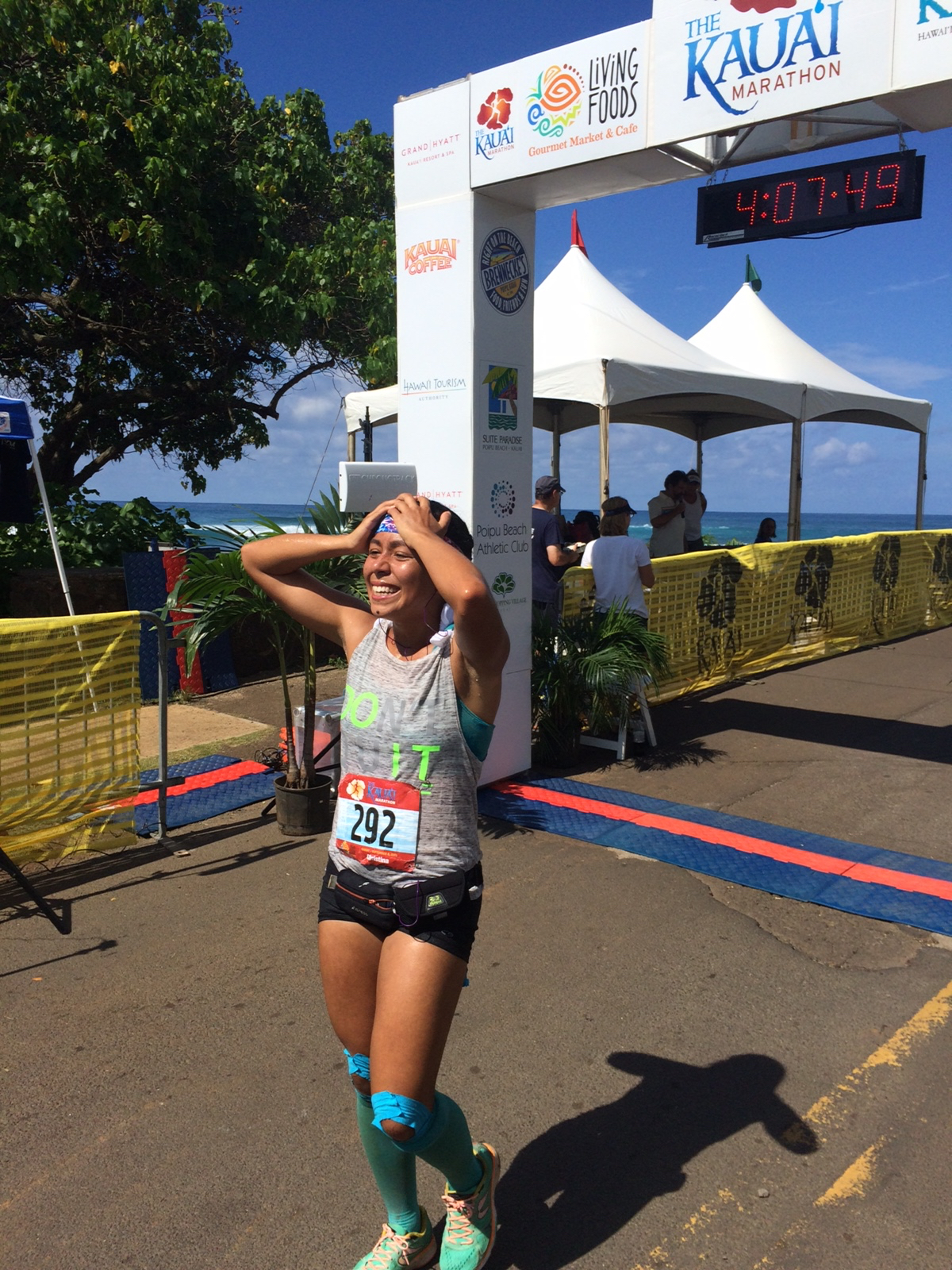
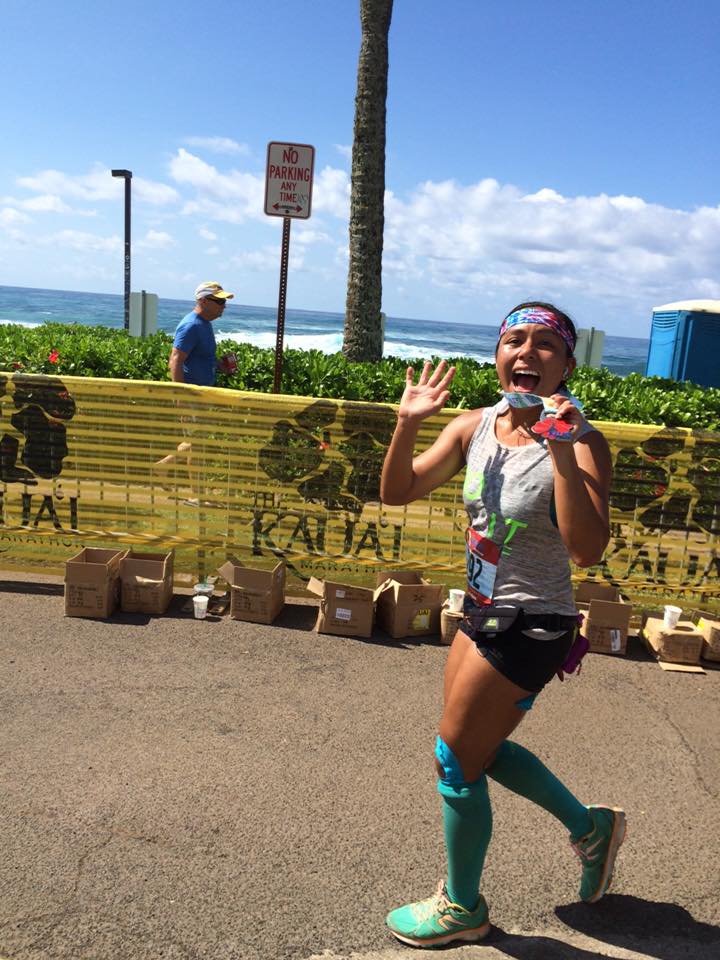
The end in sight, I began to try and kick as much as my body would let me. I had spent everything on this course, though, and it was only seeing my mom and dad frantically waving at the end that brought me speeding in with a smile on my face.

marathon 11060035_10205004916303950_1717202903062313972_n

After, I looked up and saw that I had come in at 4:07. Only 3 minutes over my PR! I was ecstatic, and really believe that keeping a positive outlook got me there.

Overall, this race went well. No stomach issues, fueled consistently every 4-5 miles, stayed hydrated and cool, and followed my normal strategy of a conservative first half and a faster second. This time, the training paid off.


*phew* Okay, that was longer, but way more fun than I thought it would be to write. I may need to try and do this again.
#AmWriting, and Running, and Writing…

My students are writing right now and so am I.

Mostly, I’m writing much more because I’m excited to announce the Education Week has brought me on as one of their bloggers! The Intersection will discuss race, culture, and topics like that as it intersects (get it? *rimshot*) with education.

Beyond that, I’m running the Kauai Marathon on Sunday. I feel very unprepared, but we’ll see what happens.

Oops! Kids are done and so am I.