Being a Woman in Trump’s America

This piece originally ran in Education Week.

I was going to start this piece off detailing some story of my own sexual assault(s) and harassment(s). I was going to start launch in, like I often do, with what it felt like: the way the pit in your stomach forms into a hard, cold stone. Your blood turns icy with fear. Everything stops moving for a second– it’s the adrenaline flooding your system. It courses through you in an instant as your brain very quickly registers that something jarring is happening to your body, and you become hyper aware in a way that you never want to.

Then, I realized two very sad facts.

First, I would have to choose an incident. Like most women, I face some kind of harassment or provocation on a near-daily basis. From what some mistakenly refer to as “minor” incidents like being catcalled when I walk somewhere to the multiple times where I have been physically grabbed or touched in ways I did not want.

To be a woman in America (and far too often, worldwide) is to understand that you exist in a space where your body not yours at all. It is a thing to be coveted, ogled, commented on. It is appraised. At best, my body is protected as “someone else’s goods,” instead of having an agency and will all its own. As such, there have been multiple times where that mindset has manifested itself into acts of harassment or violation against me.

Second, as I was crafting this piece in my head, a voice popped up saying, “That’s too cliché. Everyone is responding to this by sharing the details of their assault. It’s already overplayed.”

And isn’t that sad?


I had never planned to delve into politics with my writing. Of course, education lends itself to understanding and discussing points of policy and implementation. With the exception of acknowledging the election and giving my students space to voice their opinions, however, I rarely make clear political stances in my classroom. I try my best to remain neutral.

Recently, however, that has been increasingly difficult. Not because I inherently disagree with a political stance taken by one candidate, or the tax plan of another doesn’t make sense. It’s because, as a nation, we are witnessing the source, symptoms, and consequences of a culture in America that normalizes assault. We are seeing what happens when generations of men are taught that their masculinity is best portrayed in the toxic guise of “locker room talk” machismo that glorifies ownership of women. We are reaping the ramifications of women who have allowed that talk as “boys being boys.”

Here’s the thing: many of us have been saying that we don’t want to live in a “Trump’s America,” or “Trump World.” When it comes to rape culture, however, we are not seeing something created by a single man, we are seeing a political candidate embody a mindset that has permeated our culture for decades. To be a woman in “Trump’s America,” is actually realizing that a culture that has commodified your body now has a megaphone headed towards the throne.

I do not believe it is my place as an educator to sway my students politically towards a particular candidate. I adamantly believe in teaching my students to think critically, help them see injustice, and then allow them to make their own decisions.

Still, as a woman who stands in front of young people– women or men– every day, I cannot keep allowing these beliefs to perpetuate without teaching our students to question the source, symptoms, and consequences of that culture. If it is important to teach our students to critically question the world we live in, that includes not just the politics of our candidates, but the cultures they seek to create as well.

To be a female teacher, or any teacher, in America means teaching that this kind of message–one where our men are taught violence is power and our women accept that as the status quo– must not continue. We must teach our students to hear, understand, and ultimately dismantle those beliefs before another generation of women has to worry that their assaults is a cliché to begin with.


So educators, now is the time.

Start simply, “What do you think of the current scandal around Donald Trump?” Listen to your students. Critically question why they think what they do. Give them space to be angry if they feel that way.

Talk with your students not just about the horrible anti-Islam, anti-immigrant rhetoric spewed (Teaching Tolerance has a number of excellent resources). Teach your students about rape culture and why it’s wrong.

In a world where it is easy for hatred and ignorance to spew and grow and gain an audience, I cannot think of a more important time to be an educator. To be an educator today is to allow and invigorate the tough conversations that won’t just make for interesting classroom discussion, but could help ensure positive change for generations to come.


Head Above Water: On Self-Care

Side note: I wrote a piece about meeting with my students re: recent events over at EdWeek that, for me, is a companion to this.


“They identified the shooter in Dallas last night,” I am on my phone, wrapped in bedsheets, reading the news to my boyfriend, Chase, as he gets ready for work. My thumb brushes page after page upwards, the blue glow wrapping around my face in the early morning light. I scroll quickly, almost compulsively, through information.

“Oh, yeah? Did they catch him?”

“No,” I reply quickly, eyes still glued to the screen. “They killed him in a standoff.”

We talk a little more about the shootings. All the news this week– the deaths of Alton Sterling and Philando Castile, and now the execution of Dallas cops who were doing their job with care— leaves me with a pit in my stomach. My heart races as I read accounts, hear gunshots in videos, see images that stay behind my eyes longer than I’d like. The weight of it all can envelop me, wrapping me in gray and following me for the day.

Chase leans over me on the bed, takes his hand to the side of my face, and strokes my hair. The act makes me tear my eyes away from the screen and look up at him, handsome in his Navy uniform though he hates when I say it. I catch my breath. I have not yet told him, but feeling his hand there– fingers intertwined in my hair, palm heavy on my temple– is one of my favorite things.

He searches my eyes for a moment, before kissing me lightly. “Don’t read the news today,” he entreats softly. He kisses me again, nips my bottom lip. He is clean and Listerine-mint to my sour morning breath and tousled hair. “It makes you sad.”

My gut instinct, the twenty-one-year-old wanna-be activista, balks. Ignorance and silence are compliance, a voice in the base of my brain quickly beats back.

I know he is advocating for neither, though. He simply doesn’t want to come home and find me there still, wrapped in bedsheets and paralyzed by my own personal melancholy. I look up and give a slight nod. “Okay.”


I thought about that this morning when my department chair, Marybeth, sent me an email asking for resources not just for our students, but for herself. She noted that engaging with the news is frankly overwhelming when she is also taking care of two young children at home and, you know, being an excellent teacher and mentor.

Once you “go down the rabbit hole,” she explained, it can feel impossible to get out. “I can’t let that happen since I need to be able to care for my kids. But I decided… I need to allow my students to think and converse about this since, otherwise, I am still part of the problem.”

The email hit me like a ton of bricks. I knew exactly what it was to go down the rabbit hole. I knew what it was like to get lost in its darkness, like there was no bottom,  like there is just falling into greater depths of our own helplessness. I knew the hours I had spent reading, listening, wondering, feeling helpless.

Of course, we’d be mistaken to not see our own privilege: I am not Black. I don’t live in a highly segregated city (arguably I experience as close to the opposite as exists in the U.S.). While I have certainly experienced racism, my experience can’t compare to what other people have seen last night and for generations.

I write a lot about being up front with students. After Orlando, after Mizzou, when the system failed to indict. Even just this morning, I wrote that we must talk about it.

I still stand by this, but I want to make it clear that none of us, myself included, are built to handle seeing trauma 24/7/365. Processing trauma is not an Olympic sport. There is no correct form for it. Simply because I know that many people have it worse doesn’t mean I beat up anyone who decides to take a break to care for themselves. I am getting better at trying to include myself in that.


It’s a weird thing, sometimes, sharing piecemeal on this site, in my other writing, on various social media platforms. Like anyone else, I suppose, I only share the parts of myself that I’m willing to– because they make me happy, or they feel important (and safe) to share. As a writer (who even sometimes gets paid to write), I also admittedly think about my audience, what will be interesting, or what people will actually care about.

Yes, I am the girl at the top of the story with the handsome boyfriend who reminded me to take care of myself. It’s a sweet story with a nice ending.  I also watched him close the door, and had a lightening-flash of worry. What if something happens to him at work?

Then, I buried my face in my hands for five minutes and cried, still wrapped in bedsheets. I cried because I was sad that I had thought that. I cried because I was still terrified that it could happen. I cried because there are people who fear much worse every day.

I’m a huge advocate for being vulnerable and upfront as often as possible. Still, please  don’t think for a second that I don’t have parts of myself that are hidden and scared. I hope I never paint a picture that I am not terrified at times, that I have no idea how I will discuss this with students or, one day, my own children. There are days where I worry that I simply will be unable to.

There are days when I can’t stop crying, and there are days where I close my computer and decide, “that’s enough.” It is a privilege to be able to shut it down, I know.

I also know, though, that if I don’t, my ability to also be the girl who sits in the diner and hears her students talk about these topics, or encourages them to write about it, or tries to elevate their voices when they raise them, can get washed away in tears.

Those are the days that I don’t always write about, but those moments of quiet self-care, of seeking out light in the darkness, that are just as essential.

How Do We Move Towards Love?: Questions After Orlando

There aren’t any words for what happened today in Orlando or what could have happened in LA.

And yet, we must find words, because our silence would be our compliance.

As with most things, I am seeing nun of this through the lens of a teacher. Still, all I have now are questions:

  • How can we be better teachers?
  • How do we break down the systems of a fragile masculinity we ingrain in ourselves and, consequently, our systems?
  • How do we give kids the skills to cope with these events and tragedies?
  • What do we need for big, systemic change? What’s the catalyst? Why haven’t we hit the bottom yet?
  •  How do we instill a sense of hope and the fire to seek change instead of falling towards cynicism?
  • How do we walk towards love, even when it feels impossible?

I’m angry and sad and I don’t have answers. All I can do is sit with these questions and hope things look better in the morning.

image


I Am Fire Itself

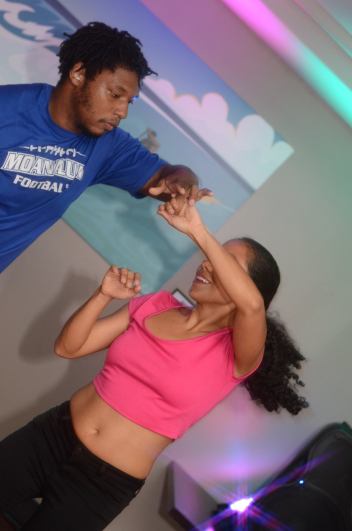
In a salsa club, the only silence exists in the panting breaths between songs.

When the music starts again, it normally begins with the tambores, hitting a heavy bass rhythm on calfskin, setting the stage. BA-rum-rum (breathe) BA-RUM-rum. The snap of the drummers wrists gives our bodies the heartbeat for what comes next. The bass and piano listen for un momento, oyen el ritmo, pick up the cues, then slide into the stereo the way crema spreads over a tostada. Ya listo. It’s ready.

At this point, everyone in the room who speaks “Latin music” knows what’s coming— bachata, salsa romántico, cumbia— and men begin to grab women’s hands and move towards the floor. The more conservative dancers stay on the edges. The peacocks and studio dancers (and maybe some viejitos who’ve decided life is too short to dance on the edges) move right to the middle.

A bar or two, then trumpets begin blaring and the floor— which is anything from gorgeous polished hardwood to interlocking pieces of plastic faux-wood set down on the carpet of some Cuban restaurant; we are a resourceful people after all— is alive. It’s own moving organism, the floor ripples and undulates with the collective heartbeat and shared shoulder rolls of whoever is on it.

Except, of course, when cha-cha comes on.

Cha-cha, for most dancers, is “when we all take a break y tomamoms bebidos,” my partner, Marco, said to me once. He shook a glass of cheap tequila at me before taking another sip. Then he winced. I had been dancing (badly) for six months when he approached me at La Playa, the only club that would let me in. He was 26 to my 18 and, when he realized I was too young to date (“A baby!” he had said, “I guess you’re not coming to my place tonight. Let’s go,” as he pulled me onto the dance floor), he decided to mold me into his dance partner instead. Unlike most Latinos, I didn’t grow up dancing at family parties or in backyards, so I just looked up at him, wide-eyed and eager, sipping my water.

When I first started dancing, I knew none of these rules. It would take me years of clubs, then performing, then competition to understand the difference between a salsa and a cumbia (footwork and the accented beat) or the unstated rudeness of neglecting to keep your long hair up (lest you whip it into the face of some unsuspecting nearby couple or, worse, your partner). I began to go to clubs by myself, but it still took thousands of nights before I could read the difference between being led by studio dancer, practiced and flailing for attention; the LA B-Boy whose body dipped into hidden hip-hop bass drops only he heard; and el salsero, who had somehow found the more ancient rhythm that had been flowing in our blood for centuries.

Somewhere in that time, I thought I understood my body’s role in it all. It was the frame (Marco would pinch my shoulders when they drooped) and the steering (one touch on the front of my left hip, and I knew which way to spin). One night, a studio dancer pulled me close and put his lips to my ear. He told me he needed to use my body to help make space on a crowded floor. “No tienes miedo,” he smiled devilishly as he told me not to be afraid before he whipped me out into turn after turn that purposefully smacked into the dancers around us.

That night, my body was the weapon.

Still, all that was years ago, I take a breath and remind myself. I am newly twenty-four, newly single and, for the first time, at Steven’s, a massive steakhouse-turned-club in industrial Los Angeles known mostly to locals y Latinos.

This is my first time out in years. Marco got a girlfriend, I had had a boyfriend who didn’t like to dance. I became a teacher and a runner. I understood that the rules often meant short skirts and forever-wandering hands (lest no man ask me to dance for the rest of the night) and I stopped dancing.

Now, though, it is a Saturday night and I don’t know what to do with myself. I am on my own for the first time in years. I drove to Steven’s on whim; I put on make up for the first time in days. I am wearing the only skirt that fits— too long and a little loose. I have only been asked to dance a few times, but fortunately years of training make up for lack of eye-candy status, and I get asked a few more times.

Then, a cha-cha comes on.


A quiet groan, and the floor clears. Cha-cha is when we rest, I laugh to myself. Santana slowly slides in, crema on la tostada, so smooth you don’t even realize you’re swaying until the guitar’s notes ooze over your body, into your chest and around your hips, like some sorcerer’s magic potion.

Oye como va, el ritmo, “come on and listen to the rhythm,” Santana croons.

This is a great song, I think. Then I realize: I love cha-cha. Cha-cha was the first Latin dance I learned when I was 17 and in my first week of college. I remember when I first started dancing— before I cared about being noticed by competitors or scouted for companies— I always danced cha-cha when it came on. I was sort of a slow salsa dancer— I didn’t read physical cues as quickly as I always should— but cha-cha played into that as a strength. The core of the cha-cha was in the wait-and-hurry-up. This dance was patience. This dance was the slow game in music form.

I am very good at the slow game.

I begin to sway and, without thinking, I take a step forward onto the edge of the floor. It is a silent sign that, if someone is interested, I will dance cha-cha.

A man walks up to me. I don’t register his face or his age, just the pale, pale blue of his shirt, como el cielo, like heaven, as he extends his hand.

I reach up, and take it. We begin moving, and after six years, I actually listen to the words in the song. Oye como va, listen up, el ritmo, the rhythm.

And for the first time in years, I exhale completely and let go. The music carries me, the guitar weaves its way into my hips. My partner watches me, for once, and reads both when to act as the motor and spin me, and when to draw up the breath before the cha-cha-cha step. We are languid and smooth. We are lava over ocean— rolling red over the cool, steady ritmo of the rhythm section. He sends me out into an empty floor and I pause at the end of my extension and look up.

My body is no longer the frame or the steering. I am not a car being driven. I am not the weapon sent to clear the floor.

I smile. Instead, I am fire itself, and my body is nothing but my own.


13123315_1718115681777953_8871502384260665307_o (1)

This is the Shape of a Lie

I’ve always known I could spin the stories in my head into believable semi-truths. I have used this “skill” for selfish and what I believed were positive purposes.  

I used to think lies were like slips of paper in my mind. When I thought I was done with them, I could file them into neat little folders, lock them up and throw away the key. Or better: burn them. 

Lies have shape. I realize this now. They have color and depth. They are weighted and real and sit on your soul until they are dealt with.

Some lies are thin and reedy; the I-know-betters and for-their-own-protections. They whip through the air without much resistance. You are so sure of them that flicking them around comes without much thought. When you tell them, you feel the sting for a moment, then it goes away and you think you’re free. The red welt that appears later is a surprise.

Some lies are the heavy ball-and-chain of shame. Even if they start small and well-intentioned, they snowball. It is the lie you are telling to save your own skin. Even if you believe it is for the best, you know that the truth could come out, but you are too scared to let it. You hate the weight of it, but you have not seen yourself without the chains of lie draped over your body for too long. You are sure you can make it part of your own.

Even if you wear the lie well, though, it will be heavy to carry. It will drag at your ankles and wrists. It will sit like a cannonball on your chest– always ready-to-blow, a teetering explosion balanced on the knife’s edge

For years, I have told myself I would learn to live with the weight. I have been carrying these lies bundled on my back for years, my own personal cross to bear. I was sure that the shape and weight of the lies was common place. It was the cost of living. I have been tempted to ignore the lies and keep going. Move forward, I would tell myself. Don’t dwell on it. 

The thing is, you cannot actually move past a lie when it’s strapped to your body like a bomb.

Sure, I’ve learned to live with many of the lies. Ignore them, even occasionally go so far as to forget about them. Something always happens, though, that reminds me of the weight that sits on my heart, between my shoulders, and in my gut. The feeling never fully goes away.

Now that I understand the ramifications of them, the question remains: What happens now? How long will I hunch my shoulders, “moving forward” silently in agony? When will I finally stop, lay the lies at someone’s feet, and ask for acceptance or, more radically forgiveness?

More importantly: at what point will I be able to set down my bundle, lay out the lies, and look at them myself?

Can I accept my lies?

Can I forgive myself?

The Breath Before

I don’t often write fiction. I don’t think I do it particularly well, but I’ve been reading a lot of Junot Diaz this weekend and I guess I wanted to see what would happen. Here’s an excerpt. 


You are sitting with your back against a white, wood-paneled wall. The sun is streaming in. It is Winter, yet somehow still bright out. It is early morning and the cold seeps through the cement of your crappy apartment near the subway and all the way through to the wood of your wall. The cold is soothing on your back. It is 6:25 in the morning, and you are unsure if what is happening to you right now is real.

Moments before, you had snuck to his phone and looked through. A cardinal sin, yes. But you have a gut feeling. That’s how you justify it. Or maybe your life-long desire to Nancy Drew your way out of situations has reared its ugly head again. Or maybe you were just curious. Maybe all three.

Anyway, you do it, and after snooping through some text messages, you find photos. Lots of photos. And videos. Some girl whose face you don’t know, but in that moment it doesn’t matter. Later, you will wonder if she was in on it, if she knew, but, in the end that won’t matter either. She didn’t promise you anything. All you know is that the photos are there and the photos mean it’s the end and the photos rip you down the middle.

Now, you are sitting against the wood wall, trying to understand what your life looks like in this moment.

Later, after you have kicked him out of your small studio, you will realize you need to be at the lab in twenty minutes. In a daze you will find clothes and your coat. You won’t know how you got there, but the doors will swoosh open. You will duck past the interns waiting to be briefed by you. “Hi, Doc!” one will call out as you give a small, tight-lipped smile back. Later, he will remark to his friends that you seemed off that morning.

You will find your way into the office. Dan, your lab partner, will turn to ask why you’re late. He will see your face and know. He’ll wrap his arms around you and you will allow yourself a single sob. A convulsed release of the air and pain that have been sitting in your chest since 6:22 that morning when you saw the photos. He’ll give you a squeeze, then you’ll release yourself from his embrace, smile, and say, “Here we go,” before you turn to do your goddamn job.

That’s for later, though. Right now, you are sitting in your room, your back against a cold, white, wood-paneled wall. You look at his body splayed across your bed, his feet hanging off. You pull at your lower lip, your nervous tick he always picks on.

When you found the photos, your stomach tightened, you caught your breath. Suddenly, for a second, you saw only white, before it faded away and the photos and the videos were there again, as clear as day. It was as though your brain has taken a screen cap of that image, so that later when you are deciding what to do, it would throw the memory of this moment back front and center. Your ears start ringing. It will not stop until you make it into Dan’s arms later that morning. You drop to your knees, before getting up, putting on the first dress you can find and sit on the bed.

You find yourself there now, your back pressed against the wall for stability.

Later, after you have woken him and told him what you know and told him to leave, he will sit there, his eyes red and wet. He will apologize, but he will know better than to ask for another chance. He will tell you he still loves you, and how sorry he is before you finally get him out the door. It will take nearly an hour.

That hasn’t happened yet, though. That will be the memory you sit with later that night over a glass of whiskey that you are crying into: the image of him on the edge of your bed for the last time.

Right now, you are sitting at the other edge of your bed, you back against the cold, white, wood wall. You pull at your lip and furrow your brow. You wonder for a second if you could simply erase the image. If you could make things easy. If you could continue unabashed and unabated.

You know you cannot.

You take a breath. In. Out. You take another breath in and reach over to shake his leg.

“I need you to wake up now.”

“Shoots”

“Shoots.”

As soon as the word slips off my tongue, I feel stupid.

It’s oddly a surreal moment for something so small: I am huffing and puffing up a hill off the Pali highway. The guys ahead of me say they’re veering off. A puff of air fills my cheeks, and without thinking expels through my lips. “Shoots guys, bye!”

To anyone not from Hawai‘i, it’s probably innocuous enough– maybe a weird use of the word “shoot,” which usually either conveys a gun blast or a substitution for an angered exclamation– but nothing offensive.

Still, I’ve lived here long enough to know that, here, it’s a word usually used by locals, something like a mix of “okay” and “sounds good” (I think). I’ve also lived here long enough to know that I am by no means “local.” I could double my four years of residency and I still don’t know that I’d be able to claim that I’m “local.” I didn’t grow up here, I moved here for a job, I spend most of my time near the University. I don’t really get to make a claim on anything.

Which is fine. I’m not upset– I know I’m lucky to get to live here at all. I’m just consistently in a state of uncertainty: is my living here an exploitation in and of itself? Will I ever be able to feel at home here?

Of course, those aren’t questions running through my mind as I walk up the road. I’m just hiking, and trying to talk story with a few guys who are helping my friends and I get back on the right trail.

I say the word and immediately feel like an idiot. Why did I do that? I think to myself. Who do I think I am? I have, frankly, silently mocked transplanted folks who try desperately try to “sound local,” failing miserably at hiding their own discomfort with being a stranger in a place they want to try and claim as theirs. I have tried to keep myself in check time and again. It’s not a big deal, I suppose, but I know better. I know that I sounded stupid, too. So what the hell happened?

Later, the memory slips back into my mind and I sit in my discomfort. “Shoots.” A word bandied over my head at guys passing each other in my gym. It is thrown down hallways and over balconies by students at the schools where I teach as they share plans and gossip for the day. Sometimes I have it bounced at me, a pass I’m not ready for, by kids after I clarify an assignment, folks who assume I’m local, or people who decide to share it with me anyway.

I hold it for a moment and admire it, like every other local word, phrase, or marker I’ve learned. I haven’t been here long, but it’s long enough to appreciate living somewhere I can finally be mistaken as belonging. It’s is always tempting to slide on the cultural uniform of this place that has, in many ways, finally provided a haven for external acceptance. When I let myself slip, I act like I know how to play this game, exhale and throw a word or phrase in, hoping for a moment to let the masquerade continue.

Still, I know to do any of this– shimmying into someone else’s life as a disguise to make myself more comfortable– isn’t any better than any of the other times I’ve felt pressured to play with words or rules that weren’t mine either, in the name of “fitting in” or “being professional” or “getting ahead.” I know that, if I try and throw these words and phrases back, try to bandy and toss them with the same levity as actual locals, I’ll only fumble miserably.

Which, of course, is what I did that muggy afternoon walking up the Pali. For a moment, I thought I could get away with the ruse, with the idea that this was a world I could claim for myself when I know that’s the farthest thing from the truth.

“Shoots.” My mouth closes at the end of the word and my lips purse immediately, a quick burst of shame and embarrassment wash from my tongue to the tips of my toes.

I sit, later, and shake my head.

…Shit.


280 Words on the Radical Non-Conformity of Cam Newton

I’m not a huge NFL fan. I follow the league in a roundabout way, since I follow college sports. All this to say: I was neither a Panters fan nor a Broncos fan when I watched the Superbowl. I’m still not particularly tied to a winner.

That’s not what’s been sticking with me. What stands out is the fascinating debate between Cam Newton and American consciousness.

Props to Jose Vilson for sharing this article from SB Nation, which had this quote:

“I don’t have to conform to anyone else’s wants. I’m not that guy. If you want me to be this type of person I’m not that and I’m happy to say that. I am my own person and I take pride in that.”

In an earlier interview with NBC, Newton said:

“I’m doing what I want to do, how I want to do it, and when I look in the mirror I see me.”

I understand why some folks are irked by Newton. I do, and don’t particularly fault anyone for that. I think, like many twenty-six-year-olds, he will probably grow and change as he gets older.

Stillthere is something radical, powerful, and exhilirating about something who so unequivocally is themselves, unwilling to twist themselves to the dominant culture’s demands. Like Beyoncé’s Superbowl performance and Formation video (and Jessica William’s marvelous response afterward), the notion that Black and other PoC people have to function along the same cultural systems as white entertainers is a false.

In a world where “professionalism” is often tied to whiteness (reading 1, reading 2, reading 3), it is thrilling to see culture figures actively and purposefully move away from that.


None of this is to say that I think this means we’ll get rid of existing cultures of “professionalism,” or that I don’t understand how it ties into existing American culture.

All I’m saying is that the more we make radical choices towards non-conformity, the closer we get to busting down the oppressive systems that often make non-conformity a threat against “American” culture instead of celebration of one’s individuality.

Image via The Root.

5 Cool Things: 2015 Reflections and 2016 Resolutions

When I started this blog last year, I began it with the intention of forcing myself to write once a week. I had no idea whether it would stick– I had been on tumblr since 2009– and barely considered myself a writer.

A year and a day later, and the world has certainly changed since that post. In my early and mid-twenties, I was big on sweeping, long-form resolutions posts. Unfortunately, I have to get up in four-and-a-half hours to get on a plane, so here’s a quick summary before I forget.


Five Cool Things I Did in 2015:

1. I started seeing myself as an actual writer, and so did other people. I obviously didn’t need other people’s validation, but it certainly helped. Getting paid actual money to write for EdWeekTeaching Tolerance and other sites was the first time I felt like writing was more than a hobby and something like an actual part of my career.

2. I created space for myself, including buying this domain name! I was worried at first, but pushing myself to create that space lead to lots of opportunities for me.

3. I continued to love my job. It is so great. It feels like home. It also inspired me to find side-jobs that are not promo-girling and actually benefit who I am and my growth. I pushed my own line of thinking and began to understand my role as an educator.

4. I am still learning to love my body and that’s okay.

5. I HIT THAT SUB-4 MARATHON AND BACK-TO-BACK MARATHONED OHHHH YEAHHHH.

Dance-Dacing-Moves-Oh-yeah-GIF

Yay! Obviously, there are a billion other things: family time, friend time, falling even deeper love with my guy. These are just some of the things.


Six 2016 Resolutions

1. Make more connections, especially with local educators, but also continuing to deepen the ones I’ve found online.

2. Become a better and more diverse writer. I’ve written mostly about education, which I love, but I’m already starting to expand my writing horizons.

3. Make space and time for people I love. I tend to get caught up in the digital world and less so in the real world. Time to try and change that. I obviously love the people I’ve met online, but I don’t want to neglect the human people in my life!

4. Be a better teacher. Always. I’m already thinking about next year, but I still want to finish this school year strong! Time to make sure the things I talk about are more than words and truly part of my practice (I think they are but I think I could get better).

5. Deepen my relationship with Christ. I’m going to write more about this next week, but I’m committing to taking time in 2016 to truly refocus and strengthen my relationship with God. I’m already planning on trying to do an eight-day silent retreat at an Ignatian house this summer. We’ll see how it goes.

6. Run a faster half-marathon, but keep a healthy detachment from running! The past two years I had specific running goals: first to run a marathon again after my break, and then to sub-4. Now that I’ve hit that, it’s time to think a little differently.


I am very excited to move into the new year surrounded with so much love and joy. After a wonderful two weeks with my family, I’m excited to spend tomorrow with friends and my partner. Here’s to a restful, successful and blessed new year.