Without warning, I gulp in a sharp breath, as though I’ve just emerged from hours underwater. My hands immediately go to my eyes, shielding me from… something. A known-yet-unnamed darkness that has haunted me for years. There are some nights when it drowns me and I wake up gasping for air.
My boyfriend stirs and begins to slip his arm around me. Instinctively, the touch makes my body jump. “Hey,” he whispers, “it’s okay.”
I blink my eyes open to early morning sun. My hair– long and barely manageable this summer– curtains over my eyes, the black streaks making a strange, abstract patchwork of the white ceiling.
My monster sits, waiting to see what I’ll do next. The adrenaline that flooded me during the dream and when I woke up begins to dissipate, leaving me feeling tingly, raw, and unbearably sad. Hot tears spring to my eyes and I almost lie down at its feet, ready to surrender momentarily to the darkness.
Then, I begin to breathe. I hear my own voice, steady and sure, in my mind. “Walk back towards yourself.”
I slowly inhale another breath. I count the seconds I can take to bring in air, filling my once gasping lungs. I count the same number of seconds to let it go. I remind my body I am not drowning now. My feet are on solid ground. I’m ok.
“Walk towards yourself. You need to walk back to yourself now.”
I let my muscles melt back into the bed. I let myself be held.
“Walk back to yourself.”
I guess I’ve been pretty quiet for a while.
I shared with EdWeek that, to be frank, I sort of got kicked in the teeth this semester. Not by my students– who are wonderful, magic unicorns of joy in a ridiculous world– but just by the nature of being a 28-year-old who is trying to adult and often failing miserably.
Between my own personal shenanigans (there is no better word. I’ve checked.), deciding to act in three shows back-to-back, attempting to ensure I still meet writing deadlines and trying to restabilize myself, I guess something had to drop. So, I’ve been a little quiet– at least in the digital space. Trying to keep up with the world at home made it hard to stay informed of the world abroad.
I’d be lying if I said I regretted any of it, though. As much as I’ve missed engaging in intense educational discussion, I feel like I’m finally starting to get back into my own skin. Or maybe I’m running away from the images of what I was. Anyway, I have more in-person connections with people I care about. I am writing and reading more. I am trying new things physically (namely CrossFit). I am quiet with myself more often.
So, what’s next?
For the first summer in years, I don’t have a job. With the exception of shows and rehearsals, I am sort of a dirtbag who has been going to the gym and reading books and writing.
Slowly, though, I think I am finally beginning to creep, to crawl, to walk back towards myself. It’s a strange feeling. I don’t know if I’ll ever get there. But I’m happy that I finally get to try.
Some favorite photos of me– no make up, frizzy hair, taken without preparation– from the yearbook students this year.
We are walking toward the crater. The wind is whipping and it’s cold— still a surprise in Hawai’i, even though I understand the science behind it.It is Christmas and, without thinking, I instinctively reach forward and grab my father’s hand.
The memory isn’t an unusual one for me, though later when I think bout it I suppose it could be. It isn’t some distant wisp of a moment from my childhood. It’s from this past Christmas. At 28, I still occasionally reach out and grab my father’s hand.
When I think about the myriad of reasons my father is special, this is one. Yes, all people show affection differently, but it less so the actual physical affection my father gives and more the unflinching openness with which he gives it. Ever since I was a little girl, I knew that I could grab my father’s hand, rest my head on his shoulder, or go in for a hug and that my action—and, I suppose, my love— would be reciprocated without question.
I once had a coworker ask me what made my relationship with my parents special, or what I thought they had done right. I don’t know that I saw it as a kid, but it strikes me clear as day now: my parents loved us without question. It was not only unconditional, which I think most parents feel, but it was obvious in its completeness.
My father, especially with all the tropes that exist about Latino fathers having rule after rule for their daughters, never once gave me a reason to think I was anything but loved. There was never a doubt that the hand would hold mine, the shoulder would carry my head, or the arms would wrap around me when I asked for them.
This is the kind of love that breeds very brave souls, I think. It is the kind of love that sends me into the world, perhaps to my father’s vexation, with a big-hearted sense of vulnerability.It gives me the strength to always reach out to others, instinctively take their hand, and love without bounds. Not only did it model what limitless love looked like, but it also taught us that we could love others and, regardless of their reaction, know that we would be unquestioningly loved by someone anyway. So many of us go out into the world seeking to be loved or cared for. There is a great sense of freedom that comes with the knowledge that no matter what happens to me, I am still a child beloved by their father.
Recently, I was reading the Prayer of St. Francis, and was struck by the following line: “O Master grant that I may never seek… to be loved as to love with all my soul.” This is the type of love my dad (aptly named “Francisco”) lives: a love without need for reciprocation or repayment, a love that exists as the air does— on principal alone.
So, thanks, Dad, for living a boundless and unflinching love each day. Happy Father’s Day. I know I can say always without question: I love you.
In a salsa club, the only silence exists in the panting breaths between songs.
When the music starts again, it normally begins with the tambores, hitting a heavy bass rhythm on calfskin, setting the stage. BA-rum-rum (breathe) BA-RUM-rum. The snap of the drummers wrists gives our bodies the heartbeat for what comes next. The bass and piano listen for un momento, oyen el ritmo, pick up the cues, then slide into the stereo the way crema spreads over a tostada. Ya listo. It’s ready.
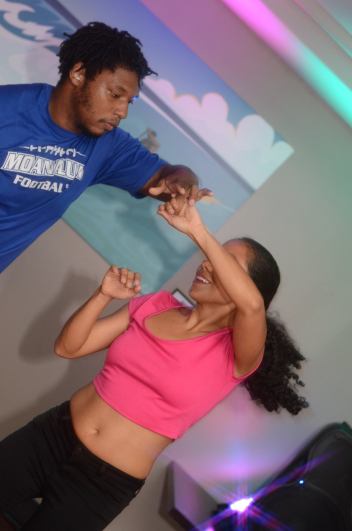
At this point, everyone in the room who speaks “Latin music” knows what’s coming— bachata, salsa romántico, cumbia— and men begin to grab women’s hands and move towards the floor. The more conservative dancers stay on the edges. The peacocks and studio dancers (and maybe some viejitos who’ve decided life is too short to dance on the edges) move right to the middle.
A bar or two, then trumpets begin blaring and the floor— which is anything from gorgeous polished hardwood to interlocking pieces of plastic faux-wood set down on the carpet of some Cuban restaurant; we are a resourceful people after all— is alive. It’s own moving organism, the floor ripples and undulates with the collective heartbeat and shared shoulder rolls of whoever is on it.
Except, of course, when cha-cha comes on.
Cha-cha, for most dancers, is “when we all take a break y tomamoms bebidos,” my partner, Marco, said to me once. He shook a glass of cheap tequila at me before taking another sip. Then he winced. I had been dancing (badly) for six months when he approached me at La Playa, the only club that would let me in. He was 26 to my 18 and, when he realized I was too young to date (“A baby!” he had said, “I guess you’re not coming to my place tonight. Let’s go,” as he pulled me onto the dance floor), he decided to mold me into his dance partner instead. Unlike most Latinos, I didn’t grow up dancing at family parties or in backyards, so I just looked up at him, wide-eyed and eager, sipping my water.
When I first started dancing, I knew none of these rules. It would take me years of clubs, then performing, then competition to understand the difference between a salsa and a cumbia (footwork and the accented beat) or the unstated rudeness of neglecting to keep your long hair up (lest you whip it into the face of some unsuspecting nearby couple or, worse, your partner). I began to go to clubs by myself, but it still took thousands of nights before I could read the difference between being led by studio dancer, practiced and flailing for attention; the LA B-Boy whose body dipped into hidden hip-hop bass drops only he heard; and el salsero, who had somehow found the more ancient rhythm that had been flowing in our blood for centuries.
Somewhere in that time, I thought I understood my body’s role in it all. It was the frame (Marco would pinch my shoulders when they drooped) and the steering (one touch on the front of my left hip, and I knew which way to spin). One night, a studio dancer pulled me close and put his lips to my ear. He told me he needed to use my body to help make space on a crowded floor. “No tienes miedo,” he smiled devilishly as he told me not to be afraid before he whipped me out into turn after turn that purposefully smacked into the dancers around us.
That night, my body was the weapon.
Still, all that was years ago, I take a breath and remind myself. I am newly twenty-four, newly single and, for the first time, at Steven’s, a massive steakhouse-turned-club in industrial Los Angeles known mostly to locals y Latinos.
This is my first time out in years. Marco got a girlfriend, I had had a boyfriend who didn’t like to dance. I became a teacher and a runner. I understood that the rules often meant short skirts and forever-wandering hands (lest no man ask me to dance for the rest of the night) and I stopped dancing.
Now, though, it is a Saturday night and I don’t know what to do with myself. I am on my own for the first time in years. I drove to Steven’s on whim; I put on make up for the first time in days. I am wearing the only skirt that fits— too long and a little loose. I have only been asked to dance a few times, but fortunately years of training make up for lack of eye-candy status, and I get asked a few more times.
Then, a cha-cha comes on.
A quiet groan, and the floor clears. Cha-cha is when we rest, I laugh to myself. Santana slowly slides in, crema on la tostada, so smooth you don’t even realize you’re swaying until the guitar’s notes ooze over your body, into your chest and around your hips, like some sorcerer’s magic potion.
Oye como va, el ritmo, “come on and listen to the rhythm,” Santana croons.
This is a great song, I think. Then I realize: I love cha-cha. Cha-cha was the first Latin dance I learned when I was 17 and in my first week of college. I remember when I first started dancing— before I cared about being noticed by competitors or scouted for companies— I always danced cha-cha when it came on. I was sort of a slow salsa dancer— I didn’t read physical cues as quickly as I always should— but cha-cha played into that as a strength. The core of the cha-cha was in the wait-and-hurry-up. This dance was patience. This dance was the slow game in music form.
I am very good at the slow game.
I begin to sway and, without thinking, I take a step forward onto the edge of the floor. It is a silent sign that, if someone is interested, I will dance cha-cha.
A man walks up to me. I don’t register his face or his age, just the pale, pale blue of his shirt, como el cielo, like heaven, as he extends his hand.
I reach up, and take it. We begin moving, and after six years, I actually listen to the words in the song. Oye como va, listen up, el ritmo, the rhythm.
And for the first time in years, I exhale completely and let go. The music carries me, the guitar weaves its way into my hips. My partner watches me, for once, and reads both when to act as the motor and spin me, and when to draw up the breath before the cha-cha-cha step. We are languid and smooth. We are lava over ocean— rolling red over the cool, steady ritmo of the rhythm section. He sends me out into an empty floor and I pause at the end of my extension and look up.
My body is no longer the frame or the steering. I am not a car being driven. I am not the weapon sent to clear the floor.
I smile. Instead, I am fire itself, and my body is nothing but my own.
I’ve always known I could spin the stories in my head into believable semi-truths. I have used this “skill” for selfish and what I believed were positive purposes.
I used to think lies were like slips of paper in my mind. When I thought I was done with them, I could file them into neat little folders, lock them up and throw away the key. Or better: burn them.
Lies have shape. I realize this now. They have color and depth. They are weighted and real and sit on your soul until they are dealt with.
Some lies are thin and reedy; the I-know-betters and for-their-own-protections. They whip through the air without much resistance. You are so sure of them that flicking them around comes without much thought. When you tell them, you feel the sting for a moment, then it goes away and you think you’re free. The red welt that appears later is a surprise.
Some lies are the heavy ball-and-chain of shame. Even if they start small and well-intentioned, they snowball. It is the lie you are telling to save your own skin. Even if you believe it is for the best, you know that the truth could come out, but you are too scared to let it. You hate the weight of it, but you have not seen yourself without the chains of lie draped over your body for too long. You are sure you can make it part of your own.
Even if you wear the lie well, though, it will be heavy to carry. It will drag at your ankles and wrists. It will sit like a cannonball on your chest– always ready-to-blow, a teetering explosion balanced on the knife’s edge
For years, I have told myself I would learn to live with the weight. I have been carrying these lies bundled on my back for years, my own personal cross to bear. I was sure that the shape and weight of the lies was common place. It was the cost of living. I have been tempted to ignore the lies and keep going. Move forward, I would tell myself. Don’t dwell on it.
The thing is, you cannot actually move past a lie when it’s strapped to your body like a bomb.
Sure, I’ve learned to live with many of the lies. Ignore them, even occasionally go so far as to forget about them. Something always happens, though, that reminds me of the weight that sits on my heart, between my shoulders, and in my gut. The feeling never fully goes away.
Now that I understand the ramifications of them, the question remains: What happens now? How long will I hunch my shoulders, “moving forward” silently in agony? When will I finally stop, lay the lies at someone’s feet, and ask for acceptance or, more radically forgiveness?
More importantly: at what point will I be able to set down my bundle, lay out the lies, and look at them myself?
I don’t often write fiction. I don’t think I do it particularly well, but I’ve been reading a lot of Junot Diaz this weekend and I guess I wanted to see what would happen. Here’s an excerpt.
You are sitting with your back against a white, wood-paneled wall. The sun is streaming in. It is Winter, yet somehow still bright out. It is early morning and the cold seeps through the cement of your crappy apartment near the subway and all the way through to the wood of your wall. The cold is soothing on your back. It is 6:25 in the morning, and you are unsure if what is happening to you right now is real.
Moments before, you had snuck to his phone and looked through. A cardinal sin, yes. But you have a gut feeling. That’s how you justify it. Or maybe your life-long desire to Nancy Drew your way out of situations has reared its ugly head again. Or maybe you were just curious. Maybe all three.
Anyway, you do it, and after snooping through some text messages, you find photos. Lots of photos. And videos. Some girl whose face you don’t know, but in that moment it doesn’t matter. Later, you will wonder if she was in on it, if she knew, but, in the end that won’t matter either. She didn’t promise you anything. All you know is that the photos are there and the photos mean it’s the end and the photos rip you down the middle.
Now, you are sitting against the wood wall, trying to understand what your life looks like in this moment.
Later, after you have kicked him out of your small studio, you will realize you need to be at the lab in twenty minutes. In a daze you will find clothes and your coat. You won’t know how you got there, but the doors will swoosh open. You will duck past the interns waiting to be briefed by you. “Hi, Doc!” one will call out as you give a small, tight-lipped smile back. Later, he will remark to his friends that you seemed off that morning.
You will find your way into the office. Dan, your lab partner, will turn to ask why you’re late. He will see your face and know. He’ll wrap his arms around you and you will allow yourself a single sob. A convulsed release of the air and pain that have been sitting in your chest since 6:22 that morning when you saw the photos. He’ll give you a squeeze, then you’ll release yourself from his embrace, smile, and say, “Here we go,” before you turn to do your goddamn job.
That’s for later, though. Right now, you are sitting in your room, your back against a cold, white, wood-paneled wall. You look at his body splayed across your bed, his feet hanging off. You pull at your lower lip, your nervous tick he always picks on.
When you found the photos, your stomach tightened, you caught your breath. Suddenly, for a second, you saw only white, before it faded away and the photos and the videos were there again, as clear as day. It was as though your brain has taken a screen cap of that image, so that later when you are deciding what to do, it would throw the memory of this moment back front and center. Your ears start ringing. It will not stop until you make it into Dan’s arms later that morning. You drop to your knees, before getting up, putting on the first dress you can find and sit on the bed.
You find yourself there now, your back pressed against the wall for stability.
Later, after you have woken him and told him what you know and told him to leave, he will sit there, his eyes red and wet. He will apologize, but he will know better than to ask for another chance. He will tell you he still loves you, and how sorry he is before you finally get him out the door. It will take nearly an hour.
That hasn’t happened yet, though. That will be the memory you sit with later that night over a glass of whiskey that you are crying into: the image of him on the edge of your bed for the last time.
Right now, you are sitting at the other edge of your bed, you back against the cold, white, wood wall. You pull at your lip and furrow your brow. You wonder for a second if you could simply erase the image. If you could make things easy. If you could continue unabashed and unabated.
You know you cannot.
You take a breath. In. Out. You take another breath in and reach over to shake his leg.
I don’t know that I’ve always written about the people who helped truly get me there.
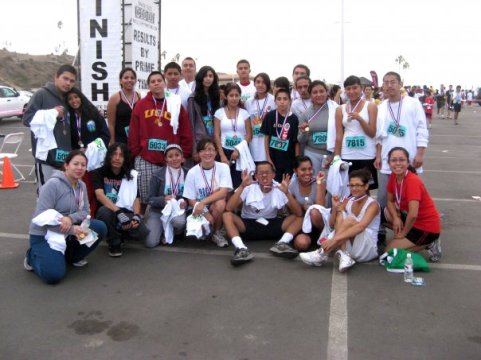
The first time I ever ran more than a mile, it was with my students.
We didn’t have a field. We ran laps around our school in preparation for the LA Marathon. My body rejected every single step and, after the first mile, all I wanted to do was quit. Who do you think you are? my mind screamed. You’re not built for this.
Then, I heard screams from the balcony of our building. “Go Ms. T! You can do this!” I looked up and saw a handful of students smiling and waving at us as we ran along. I was a new teacher at the school, and we were only a few months in, so I was surprised they knew me.
I couldn’t help but laugh, wave back, and start running again. I wanted them to see me keep trying. I wanted them to know they made me want to keep trying, because of how hard they worked. I wanted to keep going because I wanted to make them proud, the way they made me proud.
DONATE HERE
Now, 7 years later, I have the chance to help another group of students. I love running, now, because it makes me feel limitless and without potential.
So many of our students have this same potential, but aren’t given the access or resources they need to thrive the way so many other do. So many of our students are taught, early on, that their potential is tied to where they grew up or the community they come from. Their histories are painted as a false anchor instead of a bright sail to push them forward.
Our students deserve better. Hoku Scholars tries to give them those tools. Every step I take for this race, I hope to help give more students the same limitless possibilities I feel when I run.
My brother and I like to joke that growing up in our house set us up to be nerds. From a young age, images of space, aliens, and other worlds were as much a part of my life as the introduction music to Reading Rainbow (and when the show visited the set of Star Trek: TNG, I nearly wept with joy).
My father loved science fiction, and I would often walk downstairs to find him watching an episode of The X-Files or Star Trek (TNG, then Voyager later). Sometimes, he would even pop in 2001: A Space Odyssey just for fun.
So, it should come as no surprise that Star Wars was, like many, a seminal part of my childhood. Empire Strikes Back was actually my parents’ second date. I can’t even remember the first time I watched it. We had (and still have) a VHS gold box edition of the original trilogy that my brother and I would put on anytime our parents worked late or we were just looking for something to do. Our first “pets,” two tadpoles fished out of a grimy stream, were named “Luke” and “Leia.”
When I think, now, of why science fiction was such an important part of my upbringing it was because there was consistently a sense that magic was possible in our household. Growing up one of the few Latino-Filipino families in our upper-middle-class suburb, it would have been easy for our parents to err on the side of pragmatism. They had worked hard to ensure that my brother and I didn’t want for anything, and I have no doubt they wanted us to be successful and be able to take care of ourselves financially as well.
What they also did, though,was ensure that a drive for success never outweighed our ability to dream. When I wrote Star Wars fan fiction (no, you can’t see it, because I burned it) or we spent hours playing and collecting Star Wars cards, my parents never scolded us for wasting our time. When we poured over books to learn the mechanical and tactical differences between an X-Wing and TIE fighter, they didn’t tell us to do something “better.” When we devoured Star Wars novels to continue the stories in our head, they didn’t grab the pulp novels out of our hands, shoving “real” literature into them. They asked what we liked about the books.
My parents encouraged our imaginations, enabled our passions, and gave us space to think about other galaxies and imagine what it would be like to pilot the Millenium Falcon. When we watched Return of the Jedi together, my mom said she could understand the Ewoks (and since Lucas borrowed heavily from Tagalog, she could), and my brother and I looked at her with wonder in our eyes.
We were allowed to be weird, mind-adventurers because we lived in a household that fully supported not just the existence of magic, but also the discussion of what could be out there that was much, much bigger than us.
So, when I hear John Williams’s opening credits, I still feel that sense of childhood wonder. My heart squeezes a little, and I can’t help but feel a smile spread across my face. Sure, in some ways it’s because I’m excited to see the familiar faces of Luke, Leia, Han, and Chewie come on screen.
Even more affecting, though, is the memory of my magical family. When I hear the opening credits of Star Wars, I instantly remember the feeling of my family curled up in the living room watching with wonder, dreaming together, and imagining what it would be like to live in a galaxy far, far away.
Little known fact about me: my parents and older brother call me “baby,” ensuring I will be some Filipina child’s “Tita Baby” some day.
Anyway, this is a letter to myself– now, myself in the past, and myself going forward.
Baby,
The world will tell you that you need to guardyour heart and only give love to peoplethat “deserve” it.
Maybe they’re right.
And they wouldn’t be the first. “If love be rough with you,” a poetic but hot-headed man once said, “then be rough with love.”
Another man once wrote, though, that if you lead a loving life, it is natural— if not essential— that you will fall in love. You will tumble head first into vats of it. Love will be gooey, messy and unpredictable. It will get in your eyes and under your nails,and you will find it dried behind your ears days after you thought you had finally scrubbed yourself clean of it.
And that’s beautiful, but it’s terrifying. It will scald you. It will go up your nose and make you cough in that painful way that rips open your throat. It screws up your clothes, staining in a way and no amount of bleach will get it out. This love shit will seriously fuck you up.
But stop running from it, baby. Stop running from love because you’re scared that you’ll never be able to scrub it away. You’re right. You won’t. It will leave a permanent mark. It’ll burn you in ways you weren’t ready for.
But stop running.
Here’s the lie you must let go: the belief that love only looks like one thing. To choose love is to understand that love comes to us in so many forms.
Love is not just kisses and rainbows. Love is bigger than presents and the person who holds you when you cry. Love is not only the arms of someone else. It is not always soft. It is not always simple. It is not always laid out and easy to reach. Sometimes you think you’re there only to learn that love is at the top of an impossibly long, climb.
Sometimes, love is the brutal, honest truth laid out on the table, looking at all the parts of that truth and making the choice. It sees all the shaky, scary bits and says, “Yes. I’m in.
Sometimes you have that conversation with a partner.
Sometimes with a friend.
Sometimes with yourself.
Still, that’s not the only way love manifests. It’s the text chain with a friend reminding you of your own strength. It’s the head tilt and the quiet question, “Are you okay? What do you need?” It’s the kid who puts everything on the field for you and for them. It’s the moment you hear your own heartbeat and feel joy.
Here’s the other lie: they have been trying to convince you that your heart will only produce so much love. They are convinced that you will meet your quota. That someone will see your secret stash of it and steal it and not give you any in return. That will happen. It will fucking hurt like hell. It will make you feel frustrated and sad.
But it won’t mean you don’t have any more love to give.
So, even when it’s difficult, choose love. Even when you know you might get hurt, run towards love.
Well, don’t run. Walk. Stroll. Take your time. Know what it really means to give and receive it. Sit with the knowledge that you will hurt other people. Love doesn’t guarantee constant happiness, but it does create joy.
But choose love. Walk towards it even when it annoys the shit out of you. Choose love even when it is ripping you at the seams. There is a fine line between DEconstruction and REconstruction, and the two are not mutually exclusive.
You will get burnt. You will be betrayed. You will realize that what you thought was love was actually something else, or that it became something else. You will cry and feel sadness and be hurt.
But you are no fool. Don’t believe that choosing love makes you naive or a dupe. You are not unworthy. Just because love transforms or leaves or isn’t enough doesn’t mean you were weak or wrong. Your ability to give love was never a weakness. In reality, it’s the greatest strength you possess.
So, stop running FROM something, and move towards love. When you see it at the top of an impossibly long rope, climb it and ring the bell for youself. Even if you fall after, you got there in the first place, the echoed ringing a reminder of how powerful you really are.
It’s been over three weeks since I’ve written anything that is both personal and publishable. I keep opening the page, seeing the white box and the blinking cursor and drawing a blank.
How do I put down what it means to systematically dismantle a life?
Not in an overly-dramatic way. Unlike my early twenties, it lacks the flair of simply setting the thing on fire and watching the flames dance in the sky. No, this has been a slow, methodical sort of burn. It’s the kind you chose to set aflame to save everything else.
It’s understanding that you need to set down your armor– there is no fight to win now. It’s removing and reimagining the parts of yourself you were so sure you knew, then realized had become foreign when you looked in the mirror. It’s knowing that you can’t use tape and glue anymore, you simply have to appreciate what was built and move on. It’s seeing that everything is on fire, but maybe that’s okay. Sometimes you have to let things burn so new things can grow.
What does it mean to rebuild a body?
How do I explain what it signified to stand alone in my room and hear only my own heartbeat? Is there a name for the tension that exists at the corner of “absolutely terrified” and “utterly excited”? I haven’t yet found language to explain what it means to know that the next few steps of your life will be frightening and difficult, but that you don’t regret them for a moment. It’s unstitching the parts of yourself you were sure were dead, only to find there is still life there and that it is blooming in spades.
There is a unique mixture of grief, fear, joy, terror, and wonder that comes from running your hands down your own body, grabbing the flesh of your hips beneath your own hands and being able to whisper, “This is mine now, only mine now,” in small, sanctified breaths; the prayer of your own newfound path ritually running through your mind.
How do you talk about rediscovery?
Not in the pop-queen-country-belle-diva sort of way, but within the small, undefined moments you had forgotten too. The moments where you realized you were at the mercy of only your own whims; the simple, everyday decisions where you only have to ask, “What do I want?” I am searching for the couplets that could explain the simple pleasures of small choices. I am seeking stanzas that explain the joy of newfound agency.
The discovery is a montage, flashes of light shot through my heart: bursting into laughter on a hike, catching my breath in open ocean, a heavy sigh of satisfied relief at the end of a long day; all the images reveal the mini-epiphany of, “Oh! That’s who I am!” and are full of a sense of wonder I thought I had lost long ago.
Is there a word for the moment between falling and flying?
I haven’t found one yet, something that properly captures the silver second where the sheer ridiculousness of what you are doing becomes perfectly clear. It’s elation and fear. It’s passionate and sensual and make-your-stomach-drop terrifying. It’s the silence in your ears before going down the big hill on a roller coaster; it’s sharp intake of breath before you hit the water from the cliff you just jumped off of.
It’s the knowledge that you cannot go back, that what lies forward is completely unknown, but that the horizon out there is full so much potential you can’t help but just start giggling like a kid seeing the ocean for the first time.
It is wild and unfettered and chaotic and perfect.




 The first time I ever ran more than a mile, it was with my students.


 Not in the pop-queen-country-belle-diva sort of way, but within the small, undefined moments you had forgotten too. The moments where you realized you were at the mercy of only your own whims; the simple, everyday decisions where you only have to ask, “What do I want?” I am searching for the couplets that could explain the simple pleasures of small choices. I am seeking stanzas that explain the joy of newfound agency.
 Christina Torres