These Are The Parts of Me That Suck

It is probably no surprise to anyone that there is a solid list of things that I am… not good at.

When I worked in a non-profit organization, we were really big about knowing “our work styles.” We took a lot of tests to better understand what we were good at– and what were “areas of growth.” We identified what made us more effective leaders and productive humans.

And I actually really love and appreciate that, because once I did them it made me realize that the things my job was telling me I wasn’t good at were part of why I needed to leave my job.


It’s an easy stereotype, but that’s perhaps because it’s true: I’ve always been a little bit of the black sheep in my house. My parents and older brother are incredibly neat humans. While I grew up in a cluttered house, it was always very neatly organized. My brother is able to juggle and multi-task many projects at the state senate. My mom and dad often catch mistakes quickly as they write.

I am… the exact opposite. My apartment is often a mess (NOT unhygienic– I take out the trash, don’t leave food, clean up messes– but clothes. Clothes everywhere), my desk is covered in hastily made stacks of paper.

These are the parts of me that suck. I am not always good at organizing names or papers. I am often fluttering about, trying my best to get as much down, on the page, and out for feedback as possible. I don’t know why I developed like this, but I’ve always felt that I’d often rather get out my ideas– rough, raw, messy, unwieldy– and worry about the polish later. My best (i.e. highest graded, most awarded, etc.) work is often written hours before it’s due. My most successful, innovative lesson plans appear in my mind at 5:45AM that day.

I don’t mean to say that I’m throwing out papers, emails, etc with no grammar and a ton of typos, but I’ll definitely cop to missing a few commas, leftover articles, and occasional typos in my time. Clearly, the final draft of something really important will get multi-checked with my crazy-English-teacher-grammar lens, but most other things (blogs, informal emails) tend to be done how I speak– imperfections and all.

There are other things I struggle with. If I’m not interested in something, I am very good at justifying “tabling that project” until “the spirit moves me with a new idea.” I’d like to say I’m great at keeping myself accountable, but I need to really love something– my students, writing, running, fellowships etc– to actually do that. I will jam for hours, focused and unending, on something I really want to do. If you force me, though, it might take a little more arm-twisting.

And I can imagine this is annoying, especially when those mistakes ended up affecting something important. I’m not trying to excuse them. They are definitely things about myself that I should and am actively working to improve.

And yes, I’ve gotten better. Sometimes now, when I’m about to leave something for later or rush through it, my mother’s voice floats through my head, sing-song and sweet, saying “haste makes waste, mija!” I groan inwardly, stop, and make sure I properly complete the task (e.g. writing and mailing my rent check) so I get it done properly.

Still, at a certain point, I sort of had to stop and ask myself: at what point do I accept who I am, and work with my natural gifts (and challenges) instead of against them? Instead of forcing myself into jobs that asked me to be good at things that, time and time again proved were skills I lacked, when would I decide to find jobs and projects that actually helped me succeed?


This is part of the reason I became a teacher.

Let me clarify: you will be a much better teacher if you can do the things I listed above well. I’m not saying being a teacher is an easy job (ha!). Being a messy, disorganized teacher can be really annoying for students (especially when it affects grading) and co-workers. You also need to be able to sometimes get things done that you just don’t like.

What I mean is that I realized that my classroom afforded me with an extra set of eyes and ears that would keep me accountable all the time: my students. My classroom isn’t (nor should it be) Ms. Torres-getting-everything handled. It’s not really “my” classroom at all– I see my students as empowered enough to know they can correct me, work with me, and make sure that OUR ship runs smoothly throughout the year.

While being a teacher does ask me to be good at skills I struggle with, those challenges are often overridden by the fact that I really like my students. It’s cheesy, but because I want them to do well, even the parts of my classroom that cause struggle become a bigger priority. I mean, I hate grading sometimes, but man, I love my kids. I know that my consistent grading of their work makes them feel successful, so it gets done (not always as quickly as I’d like, but it does).

Here’s why I think it works though: I’m open about my imperfections with my kids, and I ask for their help all the time. I tell them, often, that I’m not perfect. I let them know that if they see something they think is a mistake, they should tell me about it. “Everyone makes mistakes!” I tell them, we laugh, and sometimes they even help me fix it (hello, teachable moments!). Because I grade pretty often, it gives them plenty of opportunity to ask me questions about why they got that score and correct it in a way that makes sure it doesn’t affect them too much (caveat: I don’t take heavy-hitter grades, like papers, lightly, and double and triple check them before I publish them. It’s only, for example, missing easy homework assignments).

The other important thing: I (try to) take feedback with humor, grace, and gratitude. If they and I both know that, sometimes, Ms. Torres is scatterbrained and needs help, there’s less of a fear that they’ll hurt my feelings if they try to help me. It also means that I need to know that people are trying to help me, and their feedback isn’t meant to hurt my feelings (this took time, but I got there!).

I’m not trying to say I’m going to remain bad at these skills forever, or that I should throw my hands up and say “TAKE ME OR LEAVE ME!” That said, I am trying to get better at leveraging the things I am good at– listening to others, respecting their opinions, being open and vulnerable about myself– to help me be better at the thing I really do love: teaching.


Anyway, this wasn’t the cleanest post, and I’m sure you’ll find a typo or two. It’s been a helluva two, crazy weeks, and I’m just so happy to be home for the next few months, and wrapping up the end of the year strong with my kids.

On Being and Learning Again

I’ve felt… off-balanced lately. A little lost, a little weary and wary. Occasionally, like most folks, darkness comes in and you cannot help but question why it’s there and who causes it.

And while it’s scary, I’m lucky. I’ve seen the other side of darkness enough to know that “Easter will come,” things will brighten. I have family and friends who love me and make me laugh, a job I cannot help but find joy in, a partner who holds my hand the whole time and says, “I got you. It’s okay. We’ll be okay.”

Last night, and in the past few weeks, I have been struggling with the concept of “Enough.” In the NPO or education world– it often feels like I don’t do enough for the people in my life– my students, family, friends. Sometimes I feel like I’m too scared to take on the big challenges because I have this nagging need to take care of myself and do things that make me happy too.

So, on a whim, I found out that Fr. Greg Boyle, one of my favorite writers, priests, human beings, had been interviewed by On Being, one of my favorite podcasts.

I’ve read and listened to so much of Fr. Boyle, and what he shared wasn’t necessarily new to me, but just hearing it reframed again was so essential– I was immediately snapped back to myself. I know what I need to be doing. I know it will take time to get there. I know I must be eager, yet patient in God’s timeline.

I think, sometimes, we want to glance over reflections or lessons we think we’ve “already learned.” Yesterday, I didn’t want to reflect on body image because I thought, Well, I’ve written about that before, shouldn’t I know better?

We are so quick to forget our own flawed perfection means sometimes the lessons need to be restudied and relearned to gain a new, revolutionary potency in our minds. It doesn’t mean we’re silly, merely that we have the fantastically human ability to form and reform new and better connections with things as we grow.

So, with a renewed heart for the work and what it looks like for me, I’m coming out on the other side.

I highly recommend the linked podcast (I always choose the unedited version), and a few favorite tidbits below:

On perceptions of the communities we serve:

So you see how they love one another or there is nobody in need in this community, for example. But my favorite one is — it leaped off the page to me — and it says, “And awe came upon everyone.” So that the measure of our compassion lies not in our service of those on the margins but in our willingness to see ourselves in kinship. And so that means the decided movement towards awe and giant steps away from judgment.

So how can we seek really a compassion that can stand in awe at what people have to carry rather than stand in judgment at how they carry it?

On doing the work:

Question: …what more can I do other than shrugging my shoulders and writing a check?

Fr. Boyle:  Well, don’t stop writing the checks!… but we must obliterate the illusion that we’re separate…How do we dismantle the barriers that exclude? How de we dedicate ourselves, in our own way… how do you participate in the birth of a new inclusion, where nobody is left out?

And that takes humility! …Humility asks the poor on the margins, “What do you need? How can I help?” 

Hubris says: “here’s what your problem is and here’s how you fix yourself.”

On mutuality in “service”:

I’m not the great healer and that gang member over there is in need of my exquisite healing. The truth is, it’s mutual and that, as much as we are called to bridge the distance that exists between us, we have to acknowledge that there’s a distance even in service. A service provider, you’re the service recipient and you want to bridge even that so that you can get to this place of utter mutuality. And I think that’s where the place of delight is, that I’ve learned everything of value really in the last 25 years from precisely the people who you think are on the receiving end of my gifts and talent and wisdom, but quite the opposite. It’s mutual.

On the work as Christ did it: 

I haven’t found anything that’s brought me more life or joy than standing with Jesus, but also with the particularity of standing in the lowly place, with the easily despised and the readily left out, and with the demonized so that the demonizing will stop, and with the disposable so that the day will come when we stop throwing people away.

The Paradox of High Expectations

Recently, I received an invitation to a group on Facebook that filled me with a strange joy and abject terror.

Screen Shot 2015-03-28 at 7.42.17 AM

Yes. It is, in fact, time for my 10-year reunion. Time seriously flies.

I do want to make something clear: I loved high school. I had a great group of friends, and thankfully still have many of them in my life. I had great teachers who pushed me, challenged me, and also humor me with a visit when I come back. All-in-all, I was very, very lucky, and look back on high school with great fondness– a privilege I know that not a lot of people have, even at my own school.

Still, I dealt with taunting– some of it the normal high school stuff, but some, as  I’ve written about, around race. In middle and early high school, I remember quite a bit of racially charged taunting, and I know my older brother faced similar things. Anecdotally, I always felt like I stuck out like a sore thumb– one of a small handful of dark-skinned kids in my classes.

Continue reading

Humor, Children, and #TheDress –  Taking a Moment to Be Wonderfully Human

(Especially In the Classroom)

I’m not going to go into #TheDress debate in here, I promise. You can read what I’m talking about here (FTR: white and gold at first AND THEN IT SWITCHED BECAUSE SCIENCE?!).

Here’s the thing, internet: between #thedress debate and #llamadrama, we had a pretty fun week. And that’s great. We should have fun. 

While these things were happening, I saw a few folks take to their twitters/facebooks/even news outlets and say things like “HOW DARE YOU DEBATE A DRESS WHEN _________ (net neutrality, economic downfall– interestingly enough these were people who didn’t talk about Ferguson *ahem*) IS HAPPENING?!”

And, I guess I get that. I am certainly known to take to the internet and bring up tough conversations. I think it’s important to talk about things that are hard, or to make difficult, relevant conversations happen in my classroom. I think that, if we fixate TOO MUCH on something, we can lose sight of real, bigger issues in the world.

NOW, that said, I think there’s nothing wrong with people taking a break and laughing/being mind blown by something. The dress one was especially cool because it was about science, perception, and the brain. I have no doubt a bunch of people looked up how color perception works, why it happened, or learned something new about the brain (I know I did).

Brain space, passion and excitement are not a zero-sum game. That mentality gets us into so many problem. People can think about MANY things. We can consider the difficult conversations of race, privilege, or what’s happening in the outside world. We can also laugh at something silly, be caught up in something (and then move on), and learn something new. One of the reasons I love the #Educolor collective so much is because we can talk about all those things AND laugh and enjoy each other. Both are necessary and lovely.

I found out about Leonard Nimoy’s Passing as I was writing this piece. Star Trek: TNG was such an essential part of my childhood, and Spock’s character was always such a wonderful discovery about what it was to be human.

I push my kids to think critically. We about race, community, nature, and justice. I try and teach them how to advocate for themselves.

I also want to let them be kids and, most importantly let them learn how to be human. That means that, like all things, laughter and silliness and unabashed joy are absolutely encouraged in moderation (and maybe outside of it too). As this piece notes, “every now and again, it’s nice to talk about serious questions through a topic that’s anything but.”

So, at the end of their tough vocab quiz today, my kids have the space to write me a little note about what color they think #TheDress is, after my first period did it, we all had a good laugh about it and talked science. That seems like a pretty good Friday to me.

Activism, Poetry, and Students

Sorry for the delayed post this week! I was waiting for this assignment to be turned in from my students so I could write more about it! 

This week, I’m going to be writing a little more in depth about a lesson I did with my students around using poetry to discuss important topics and issues. I’ve broken it into four parts and linked it below.

Continue reading

Want to Know vs Want to Win: Learning to Listen

I had a whole, long thing in my head about a topic, and then brilliant thinker who I follow from afar summed it up in 140 characters:

https://twitter.com/Karnythia/status/563735107803295744

This made me think a lot about conversation, power, and intention though, especially in the context of my own classroom. A lot of times, we taught to enter into (perhaps difficult) conversations by asking questions: why do you think that? What makes you say that? How did you come to that conclusion? etc.

I’ve come to realize, though, that sometimes people are entering into the conversation differently than I am, and sometimes, as teachers, it’s easy to default into a line of questioning that is not helpful. This leads me to ask (often myself):

Are you asking because you want to know? Or are you just asking because you want to win?


I acknowledge that fighting for the sake of fighting (or perhaps “debating for the sake of debating”) is fine. Some people love that, and I think that it can be really great. My boyfriend loves a good debate, and is the type of guy who watches Fox News just to feel riled up and be incensed at people. If that’s your thing, that’s cool.

But just because you love that doesn’t mean the other person does, and it’s important to think about that other person. Empathy matters! It’s important to respect the other person if they decide they’re not about where this conversation goes. It’s not because they’re “weak” or “scared,” they might just not be the type of person who wants to go 10 rounds for the hell of it.

My issue with it in a lot of cases though is that it I feel like rarely leads to sharing or increase of knowledge. If you are debating or asking questions just for the sake of pushing buttons, you’re not really listening to the other person. So, instead of actually taking the time to process what they’re saying or trying to hear the opinion, you’re only listening to them so you can come up with you’re next argument, so you can find the best way to poke holes in them so you can win your points.

That’s fine, I suppose. If your purpose is to win all points and ruffle some feathers (yours and your opponents), then do you. But I don’t know if it’s the best way to lead to actual conversation and intellectual growth.


Here is where it comes back to the classroom, though. As teachers, we are always in positions of power and privilege over our students. No matter how smart my students are, I am the adult in the room. I am the one (theoretically) guiding this class, and in charge.

So when I want to have a discussion with my students, I HAVE to be asking myself: am I asking them because I really want to know? Or am I asking them because I’m right and their wrong?

Clearly, the latter has some of its merits. Guiding questions can be a good way to question students and let them find their own way to the answer while providing some clues for them to follow. But I think as a teacher it’s very easy to fall into that type of questioning even when there is no real right answer, or students can be pushed to think outside the box.

If I want my students to truly reflect on something, I shouldn’t be trying to score points of them, or only half-listening because I want to prove MY point, I should be actually listening to themDoing so might lead not only to them teaching something to teach other, but teaching something to me too.

Grumpy Teacher

My students are currently typing, but I missed my normal weekly deadline (agh!) so figured I’d type along with them. I love their topic and want to explore it at some point myself (write about something you’ll never do/never do again). 

I’ve noticed lately I’ve been in such a grumpy mood at my kids. I don’t know if it was just that time of year or the honeymoon is wearing off (I suppose that more than a semester in isn’t bad for that to happen). It also tends to happen around progress reports, because they ask ridiculous questions (can I turn in this 2 month old homework assignment for late credit?) or act immature and entitled (I sent you my late homework 12 hours ago and you still haven’t graded it!). And I’m just looking at them like “OH REALLY.” Then I feel guilty for being angry at children (who I also love). Then I get annoyed and throw my phone across the room when I see their emails (props to my guy for listening to and loving me while I vent).

I still love them, though, and they still mostly crack me up and make me laugh. I’m going to try and refocus myself this week and get back in the game. It’s only four more months till summer, right? 🙂

Oh! Speaking of summer– I’ve accepted a position to teach two classes at my school and I’m so pumped. One is a “Little Journalists” class for 5th-8th graders, and one is a poetry and creative writing workshop they’re letting me design! I’m so excited to get to design my own class completely for the first time.

Okay okay. That’s all for now. Time to get them back on task too! 😉

Stargazing (A Brainstorm on Watching Children Grow Up)

A group of

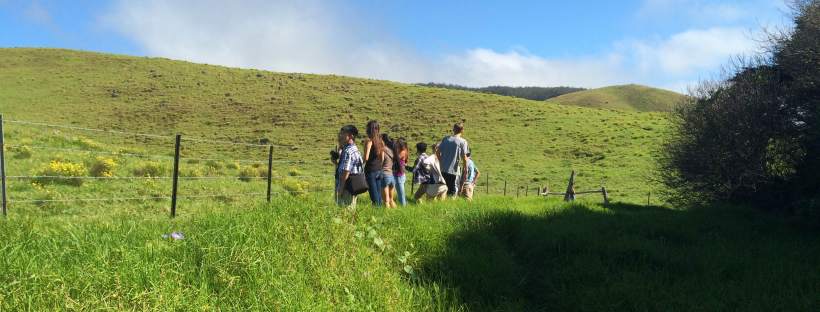
A group of students looking out on a Waimea meadow.

Ok. ok. I am writing. This is a purely life-update-y get-stuff-on-paper post. I’m a little more than delayed. With Monday being Martin Luther King Jr. Day, then I got a horrible cold from students while on a speech tournament… things just got lost.

I also got to be a part of an amazing #educolor twitter chat today, which you can read more about here.

SO… things are good. No really. My friend Shuhei asked what was new with me and… I don’t have much to report. Things are good! Chaperoning the speech team was a blast! Things are generally nice and quiet.

OH!


So, my students, their speech coach, and I went Stargazing while we were in Kohala. It was absolutely gorgeous. I’m not a particular outdoorsy person (while I love hiking, I’ve never been camping), so I have very little context what it was like to be in rural anywhere, much less Hawai‘i.

It was… breathtaking. Even remembering it, I am nearly speechless. It was like looking up in a star-dome at a museum, but knowing that it’s completely real, having everything twinkle and fill the sky with a vividness never imagined is surreal. I looked up at what felt like millions of stars, and the students and I were quiet. They self-implemented a five minute silence rule, but they were quiet and contemplative for at least ten.

After, I was standing in the freezing cold with Bill, their coach and a 27-year teaching veteran. We watched the kids laugh and joke and talk about stars. They had just a complete joy in each other. In the brief time they had known me, they had made me feel like I was part of their family, like they genuinely liked me being around.

Bill looked at me and said, “This? This is why I’m still doing it.”

I looked at their backs while they were quietly looking at the stars, and completely understood what he meant. It’s easy, when looking up into the great oblivion, to perhaps feel lost. To think about what we’ve lost and where we stand in that loss, or what we are seeking and what are place in the world is. It’s beautiful, yes, but also perhaps a little terrifying. What happens now? What will this be in five years? Ten?

I looked at my kids looking at the stars and I just… knew. This was right. This was lasting. I was filled with such a sense of peace and contentment. I loved getting to just be around, watch them learn stuff, learn stuff with them and from them, talk story and just enjoy seeing them grow up.

I think beyond the whole idea of feeling good about ~sharing knowledge~ with kids, we forget to see one of the most basic and grace-filled things we have as educators: we get to see children become adults. We are witness to and take part in the actual creation of human minds. We get to watch them change and form and reform and fail and find so much beauty and life. We get to see them discover. We get to see them empowered. Hopefully, we get to help them do it.

Things, as they stand now, are right where they need to be in this moment. I am 27 and consistently on the precipice of something new and everything is in flux always. Except that it’s not. The instability itself, the moment we were in right then and even now are what stays. The stars I saw that night may grow or die out or change position in location from where I stand, but that’s okay. Things will move, but those stars were right where they needed to be for my students and I to just love them and spend some time finding joy in each other.

We are the same. Things may will change, but all we can ask is to find the peace and contentment to see how we are affecting this moment. Right now– and likely for a while– I am a teacher. I am a guide. I am (hopefully) a friend. Right now, I am finding joy with kiddos, and it’s exactly where I need to be.

Over-Planning and Keeping the Adventure

Hello again. It seems like I got a few followers from my last post. Cool! Hi! *wave*

Anyway,  I just set a 5 min timer. I’m going to try and write for at least as long as my students have to. That seems like a good start (though I’ll probably go over).

I had to ignore the alarm I set on my clock to write each week because I got caught up in lesson planning. I’m pretty behind of what I thought I’d get done over the break, which I finally realized today. Definitely my own fault– I forgot to bring the books my kids are reading, which is about the dumbest thing ever. I blame the sudden and complete overthrow of productive-brain for vacation-brain.

So I started jamming today, and realized a few things:

1) The online app for student discussion I had planned on using with my students doesn’t actually fit my needs. Through a series of tweets, a facebook post, and even a G+ post, I’m trying to crowdsource the best response. BTW if you stumble upon this post and know one, I’d love to hear from you.

2) I need to give my students more formative assessment over the course of a book. They asked for it! I allowed my students to give feedback, and most of them said they want to do MORE while we’re reading. So, time to get crafty and figure out some great projects for them to do.

and finally 3)

I’m worried about over-planning, however, and ruining the sense of adventure and spontaneity that I can gain with my students.

Some background: I’ve never been great at lesson-planning, or just planning in general. It’s always been a HUGE area of struggle for me in my practice. I have the skills to create a good project plan, but when it comes to the doing of something, I’m a big procrastinator. This is actually a reason I went back to the classroom– the jobs that I had had were all fuzzy and “project based,” which I appreciate, but realized is not an environment I do well in. I am trying to own the fact that, unless I’m REALLY COMPLETELY hyped about a project, or someone is going to hold me accountable to get something done (like, say, 28 children in a classroom looking at me saying, “What are we doing today, Ms. T?”), it’s going to be completed in the 5 minutes before I need it.

Now, this has been generally fine this year. I did make a point to unit plan my year, and the school I work at has a daily English curriculum that we follow each day. Beyond believing in it as a curriculum, it makes my life MUCH easier as a teacher. That said, I am worried about getting lazy and falling back on this too much, something I think I may have done at the end of this semester, and lose out on the opportunity to do some great projects.

SO, I’ve been trying to get better about planning. What I’m worried about, though, is that if I over-plan now, I won’t leave any wiggle room for some fun projects I come up with on the fly. For example: after hearing some of my students talk about Instagram, I got the idea to have them create Instagram accounts for characters in The Adventures of Tom Sawyer (my example). I threw the activity together that morning, which was nuts but often where my best ideas come to light, and the kids and I had a blast. They also did a great write-up.

In general, I am trying to leave things more up to God to point in my direction (I think St. Ignatius called this “spiritual freedom” or “ambivalence”). This morning, for example, I had planned to do a 12-mile long run. I wasn’t feeling it almost as soon as I started, but I tried to keep moving and power through. As I was running, I realized that there was a national park open I’d never explored before. I decided to head over and check it out. Did it screw with my splits and mileage? Sure, but it was really pretty and certainly fun.

So how do you find balance between good planning and the freedom to play? How can I make sure I don’t get lazy and not push my kiddos and myself, but still let us take the time we need? In an education environment so test-heavy and over-focused on scores (which I am always worried my school will become), I want to make sure I enjoy the fact that my kids aren’t hindered by this and we can take the time to explore stuff.


Anyway, beyond that, life’s good. Planning, writing, running, napping. Ah vacation, you are great.

I also, by the way, have a 2015 Resolutions post coming. I decided to submit something to HuffPost Hawai‘i though, so we’ll see if it gets play there first.